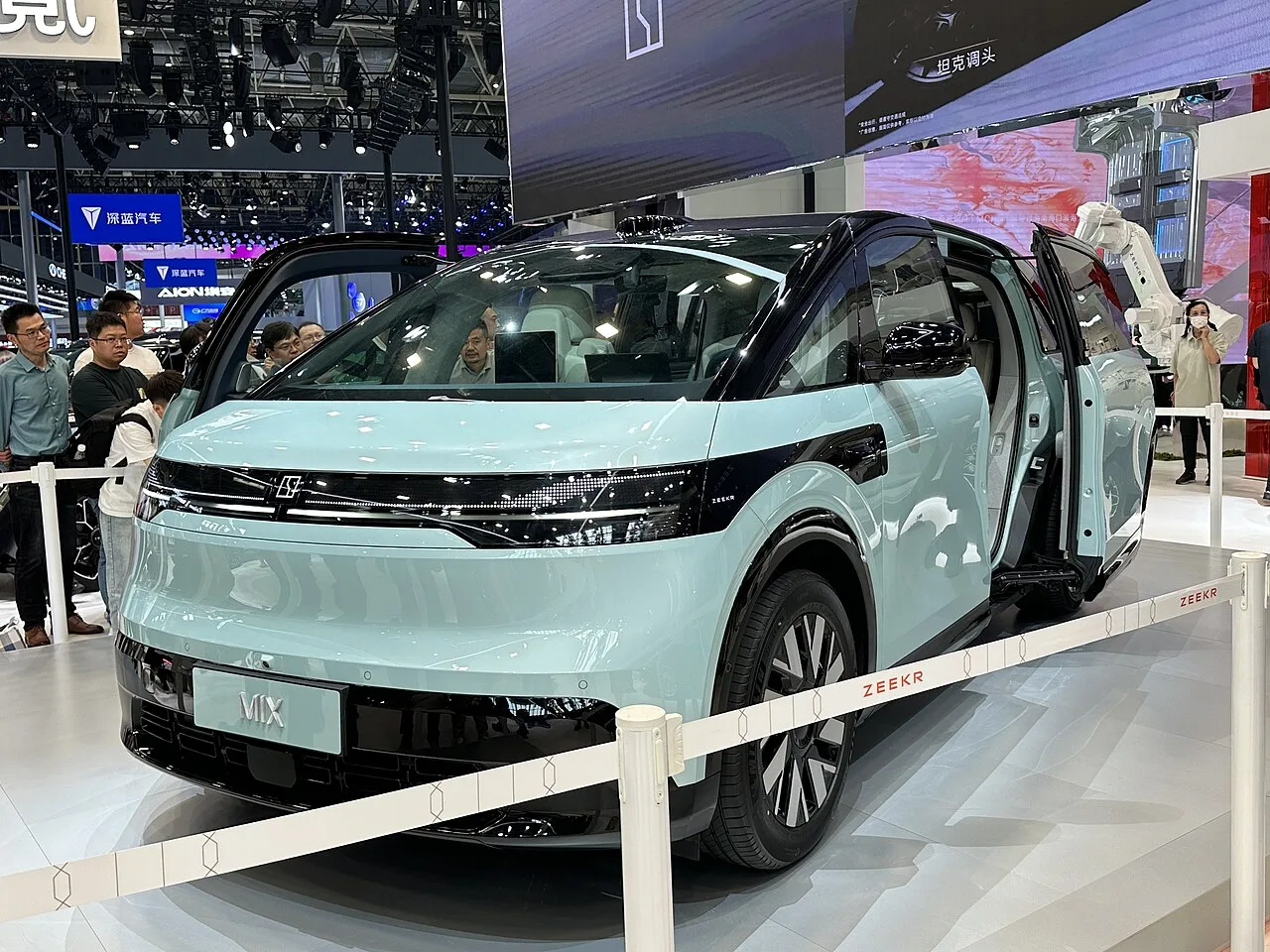
The minivan with no B-pillar.
422 horsepower — an M3’s worth — in a friendly electric minivan whose doors open onto a wall-sized hole where the pillar should be. The Zeekr MIX hides aerospace-formed steel columns inside its doors, latches them like an airliner, aced its crash tests — and flopped in showrooms. Then its real customer showed up: a robot fleet in Phoenix.
A minivan with the power of an M3 — and a hole where the pillar should be.
The Zeekr MIX is three impossible things in one friendly box: a compact minivan with 422 hp (an F80 BMW M3 makes 425); a compact-SUV footprint stretched over a 3-meter wheelbase — a 64% wheelbase-to-length ratio almost nothing on sale matches; and, most famously, no B-pillar at all. Launched October 2024 at ~$39–42k, China-only, on an 800V platform whose LFP pack charges 10–80% in 10.5 minutes. This guide takes it apart — and then tells you the twist.
Specs per Wikipedia/CarNewsChina; charging and packaging figures in Sources. Images throughout are AI illustrations.Every car has a B-pillar because physics demands one. So where did it go?
The B-pillar carries your roof in a rollover and your ribs in a side impact. Deleting it gives the MIX a 1,480 mm uninterrupted opening — and an enormous structural debt. Zeekr’s answer: the pillar moved into the doors. Each door hides a ~70 mm steel column, 1.3 meters long, in 2,000 MPa press-hardened steel — four columns total, each rated to carry ~20 tonnes. Closed, the doors are the pillar.
Column dimensions and load figures are Zeekr’s (ZOL/腾讯 engineering coverage) — flagged as company-reported.The columns are made like aerospace parts.
You can’t stamp-and-weld a column like this — seams are where 2,000 MPa steel fails. So the MIX uses 热气胀成形, hot-gas forming: a heated steel tube expanded by gas pressure into a water-cooled die that quench-hardens it in a single stroke — a titanium-aerospace process running at 2–5% of hydroforming’s pressure, yielding a seamless closed section ~3.5 mm thick, double normal hot-stamped gauge. Then the doors latch like aircraft doors: two lock points up front, three in the rear, pinning each column into the sill and roof rail to close the load path.
Process detail per 腾讯新闻 engineering coverage; the cutaway at right is an illustrative AI render, not Zeekr’s drawing.Does it work? The stunts say yes. So does the referee.
Zeekr’s launch demos were theater with real physics: a 1.7-tonne car striking the pillar-less flank at 60 km/h, then a 2.2-tonne shipping container dropped four meters onto the roof — and after both, the doors still opened. Staged, yes. But the independent referee agreed: C-NCAP 2024 gave the MIX five stars at 91.8%, with 94.85% for occupant protection — pillar not required. Torsional rigidity, per Zeekr: 37,600 N·m/deg, stiffer than most sports sedans.
Demos per 搜狐 launch coverage (company-staged); C-NCAP score from the official evaluation record.The doors are a choreography — with a fail-safe stack worth studying.
The opposing electric doors slide in opposite directions — front forward, rear back — each carrying its own millimeter-wave radar for obstacles, with an interlock that straightens the front wheels before the front door passes them. And the part that matters after China’s door-handle tragedies of 2025: triple redundancy — main power, a supercapacitor that can still fire the unlocks, and a pure mechanical release. Doors you can always open is a safety spec, and the MIX wrote it down before the industry was forced to.
Door systems per 新浪科技 teardown coverage; the handle debate context per the Xiaomi guide’s Chengdu incident.Inside, the payoff: a room, not a row.
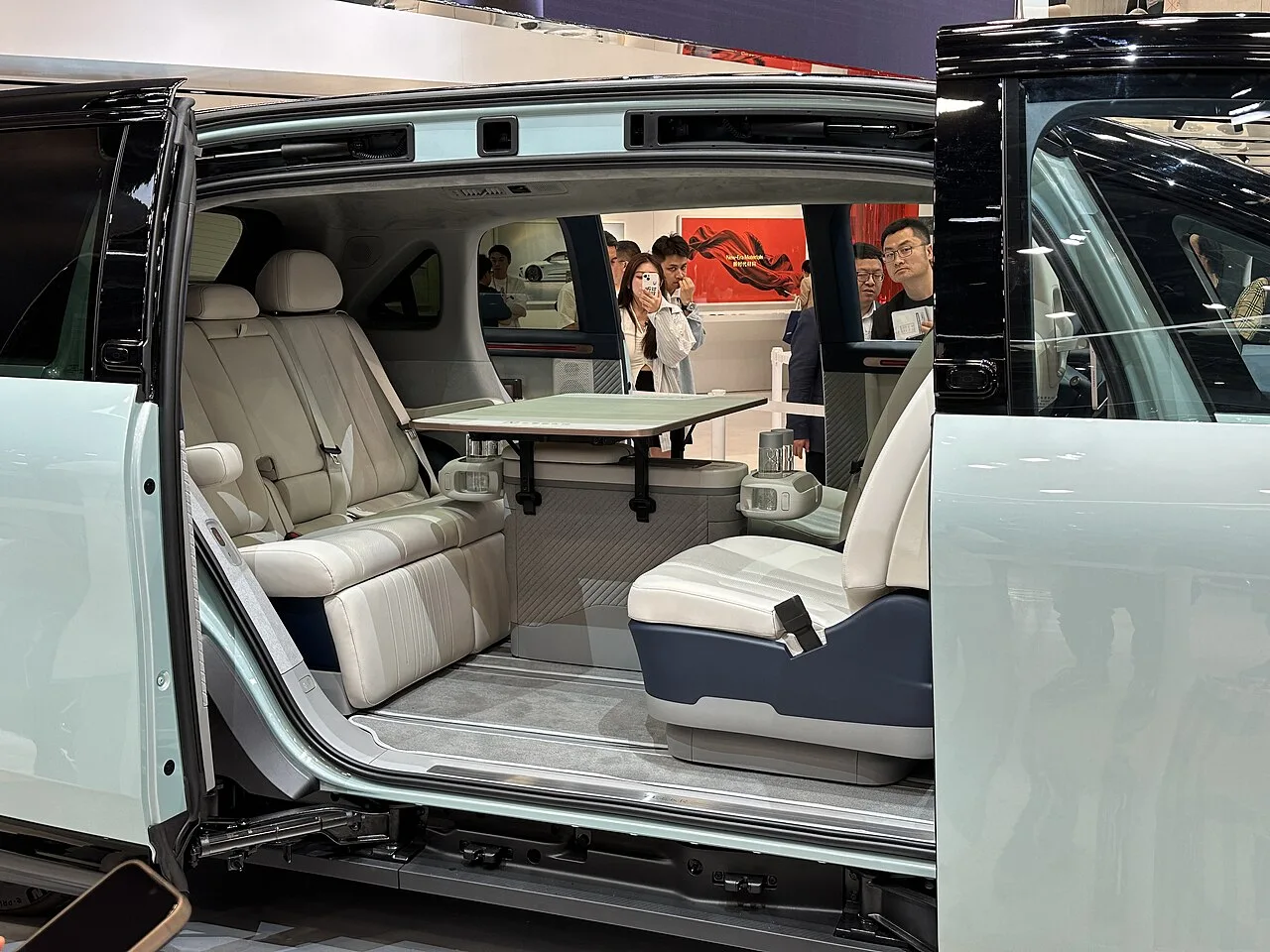
The reason to delete a pillar is what it lets the cabin become. The MIX’s front seats rotate — up to 270° — to face the rear bench; the center console slides and becomes a table; the floor is flat under a panoramic roof. Zeekr’s pitch was 移动的家 — “a home that moves.” With both doors open there is simply a wall-sized aperture into a lounge. Nothing else on sale boards like it — remember that sentence for Act IV.
Interior configuration per launch materials and reviews; render at right is an AI illustration.Now the twist: this platform wasn’t designed for families.
SEA-M — the architecture under the MIX — was designed robotaxi-first. The Zeekr–Waymo M-Vision concept (2022) predates the consumer car entirely. Re-read the spec sheet with that lens: a wall-sized, pillar-free, radar-watched, always-openable door; a flat lounge floor; a boarding experience that explains itself — because in a robotaxi, no driver helps you in. The MIX isn’t a quirky minivan with robotaxi genes. It’s a robotaxi wearing a minivan costume.
M-Vision timeline per electrive/Wikipedia; platform lineage in Sources.And the robotaxi shipped. You can ride it today.
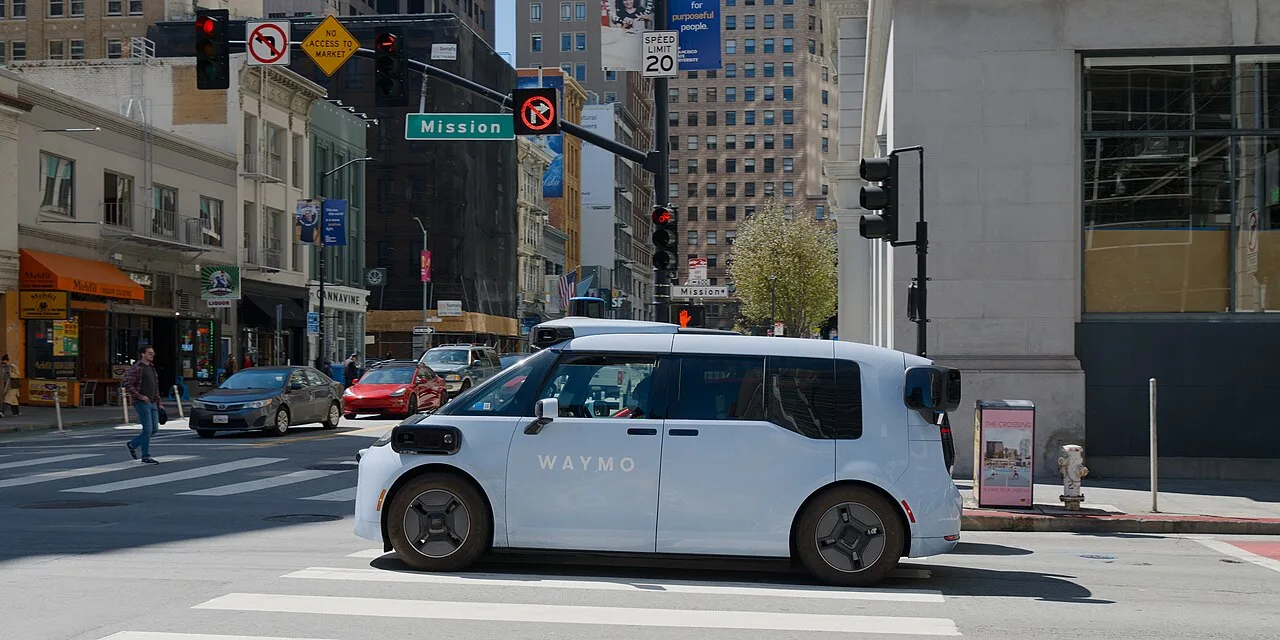
The lineage became the Zeekr RT, which became the Waymo Ojai (named January 2026): same B-pillar-less opposing-door architecture, built in Ningbo, integrated with Magna in Mesa, Arizona, and carrying paying riders since mid-2026 — through 100%+ tariffs, because the economics still work. The MIX’s strange doors are earning fares in Phoenix right now. Keep that in mind as we turn to the sales chart.
TechCrunch (May 2026); Forbes on the Mesa factory; InsideEVs service coverage.Because the sales chart is brutal.
The consumer MIX flopped: ~1,633 units in 2024, ~1,290 in all of 2025, single-digit months by 2026. Five seats in a market that wanted six or seven; a price between segments; a launch remembered mostly for a hot-pot dinner staged in the cabin. The engineering press swooned; buyers shrugged. A masterpiece of structure, boarding and safety — for a customer who hadn’t arrived yet.
Sales per cnsuv database and 新浪财经 post-mortems; marketing backlash per 腾讯新闻.The lesson: requirements, not craftsmanship.
The MIX is the rare case where “ahead of its time” is checkably true — the same architecture is in revenue service under Waymo. But for a lean reader the lesson is sharper: the engineering brilliantly served a user who didn’t exist in showrooms. Over-serving an absent customer is still overproduction — even at 2,000 MPa. Define the customer before you form the steel. Go see — in Phoenix, if not in Hangzhou.
Companions: The 18-Month Car · The Phone Company’s Car.
AI illustrationThe packaging trick: 4,688 mm long — a compact-SUV footprint — on a 3,008 mm wheelbase. A wheelbase-to-length ratio of 64%, among the highest of any production car, courtesy of an EV-native cab-forward platform.
AI illustration
AI illustrationThe columns are made by 热气胀成形 — hot-gas forming: a heated steel tube is expanded by gas pressure into a water-cooled die that quench-hardens it in a single stroke. It’s an aerospace process (titanium parts), needing only 2–5% of hydroforming’s pressure, and it yields a seamless closed section ~3.5 mm thick — about twice normal hot-stamped gauge.
The doors latch like aircraft doors: dedicated lock points — two on the front door, three on the rear — pin the hidden columns into the sill and roof rail, completing what Zeekr calls a 720° cage with a triple-layer sill beam. Torsional rigidity: 37,600 N·m/deg (company).
The demos, staged but real: a 1.7-tonne car striking the pillar-less side at 60 km/h, followed by a 2.2-tonne container dropped from 4 meters onto the roof — after both, the doors still opened. The independent anchor: C-NCAP 2024, five stars, 91.8% overall (94.85% occupant protection).
AI illustrationInside: front seats that rotate — up to 270° — to face the rear bench, a sliding center console that becomes a table, a flat floor and a panoramic roof. Zeekr’s pitch was 移动的家 — "a home that moves."
That lineage shipped: the Zeekr RT — same B-pillar-less opposing-door architecture — became the Waymo Ojai (named January 2026), built in Ningbo, integrated with Magna in Mesa, Arizona, and carrying public riders since mid-2026, tariffs and all.
The consumer car flopped: ~1,633 units in 2024, ~1,290 in all of 2025, and single-digit monthly numbers by 2026 (~15 units January–May). Five seats where MPV buyers wanted six or seven, a positioning limbo between segments, and a marketing cycle remembered mostly for a hot-pot dinner staged inside the cabin.

Define the customer before you form the steel.
The MIX is a masterclass in structural engineering and a case study in requirements: it solved boarding for a user who hadn’t arrived — and that user turned out to be a robotaxi fleet, not a family. Both halves of that story are worth studying.
The 18-Month Car
The development system that makes cars like this possible at all.
kaizumi.com/guides/the-18-month-carThe Phone Company’s Car
Xiaomi’s speedrun — the demand-side twin of this engineering story.
kaizumi.com/guides/xiaomi-su7Parts Per Billion
Inside CATL — whose Qilin pack rides in the MIX’s floor.
kaizumi.com/guides/parts-per-billionTrain your team
AI-built lean training for your industry, your roles, your reality.
kaizumi.comFrequently asked
- How can the Zeekr MIX be safe without a B-pillar?
- The structure moved into the doors: each door hides a ~70 mm-diameter, ~1.3 m column in 2,000 MPa press-hardened steel — four columns total, each rated by Zeekr to bear about 20 tonnes. When the doors close, aircraft-style lock points (two front, three rear) pin the columns into the sill and roof rail, completing the load path. Independent verification: C-NCAP 2024 awarded five stars at 91.8% overall, with 94.85% for occupant protection.
- What is hot-gas forming (热气胀成形)?
- An aerospace-derived process used for the MIX’s hidden columns: a heated steel tube is expanded by gas pressure into a water-cooled die that quench-hardens it in a single stroke, producing a seamless closed section about 3.5 mm thick — roughly twice normal hot-stamped gauge — with no welds to fail. It needs only 2–5% of the pressure of conventional hydroforming.
- How powerful is the Zeekr MIX really?
- The rear motor makes 310 kW / 422 hp — essentially the output of the F80-generation BMW M3 (425 hp) — in a compact minivan. It rides on Geely’s 800V SEA-M platform; the 76 kWh LFP "Golden Battery" charges from 10–80% in about 10.5 minutes, and a 102 kWh CATL Qilin pack offers 702 km CLTC range.
- What happens to the electric doors if power fails?
- Triple redundancy: main power, a supercapacitor backup that can still fire the unlocks, and a pure mechanical release. Each door also carries its own millimeter-wave radar for obstacle detection, and an interlock straightens the front wheels before the front door slides past them. In the wake of China’s 2025 door-handle controversies, this fail-safe stack is the part of the spec sheet most worth copying.
- Did the Zeekr MIX sell well?
- No — it flopped as a consumer car: roughly 1,633 units in late 2024, about 1,290 in all of 2025, and single-digit monthly sales by 2026. Reviewers loved the engineering; buyers wanted six or seven seats and clearer positioning. The guide treats this honestly: it is simultaneously a commercial failure and an engineering landmark.
- What does the Zeekr MIX have to do with Waymo?
- Everything — it is the guide’s twist. The SEA-M platform was designed robotaxi-first: the Zeekr–Waymo M-Vision concept (2022) predates the consumer MIX. That lineage became the Zeekr RT and then the Waymo Ojai (named January 2026), sharing the B-pillar-less opposing-door architecture — built in Ningbo, integrated with Magna in Mesa, Arizona, and carrying paying riders since mid-2026. The pillar-less door exists because robotaxi passengers board with no driver to help them.
Related
Founder of Kaizumi, an AI-powered Lean training platform. More about Matthew →
Updated July 12, 2026 · Drafted with AI assistance and reviewed by Matthew Savas for accuracy. Every statistic is dated and sourced (data as of 2026-07-12); structural figures (column loads, rigidity, crash demos) are labeled as company claims with C-NCAP as the independent anchor, and the sales flop is reported as plainly as the engineering. Illustrations are AI-generated and labeled.
References
Every statistic in this guide traces to one of the sources below · data as of 2026-07-12. Chinese titles are given as published.
The car
The hidden pillar & structure (company figures flagged)
- ZOL — 隐藏式双B柱: 70 mm columns, 2,000 MPa, ~20 t per column
- 腾讯新闻 — the hot-gas-forming (热气胀成形) process and door lock points
- 搜狐 — the staged crash demos: 60 km/h side impact + 2.2 t container roof drop
- C-NCAP — Zeekr MIX 2024 evaluation: five stars, 91.8%
- 新浪科技 — door radar, wheel-straightening interlock, supercapacitor + mechanical release
- 12365auto — 720° cage, triple-layer sill, torsional rigidity