Lean, made visible · Field notes

Leaner than Toyota?

China’s EV plants ship a car every 76 seconds from robot-dense dark factories. So has the student finally out-leaned the teacher? We took the question seriously — financials, quality studies, teardowns, three languages of sources — and the honest answer is: faster and cheaper, yes. Leaner, mostly no. And partly a category error worth understanding.

Scope: Chinese auto plants vs TPS, measuredSources: English · 中文 · 日本語, cited throughoutReading time: ~8 min, scrolling
Scroll to begin
Act I · The question

Robots every 76 seconds vs andon cords over humans. Who’s leaner?

The question arrives on every LinkedIn feed: Chinese EV plants ship a car every 76 seconds from robot-dense "dark factories," while Toyota still hangs pull-cords over people. Surely the student has surpassed the teacher? This guide answers with evidence — financials, quality studies, teardowns, industry data from three languages — and the answer is more interesting than either cheer: faster and cheaper, yes; leaner, mostly no — and partly a category error.

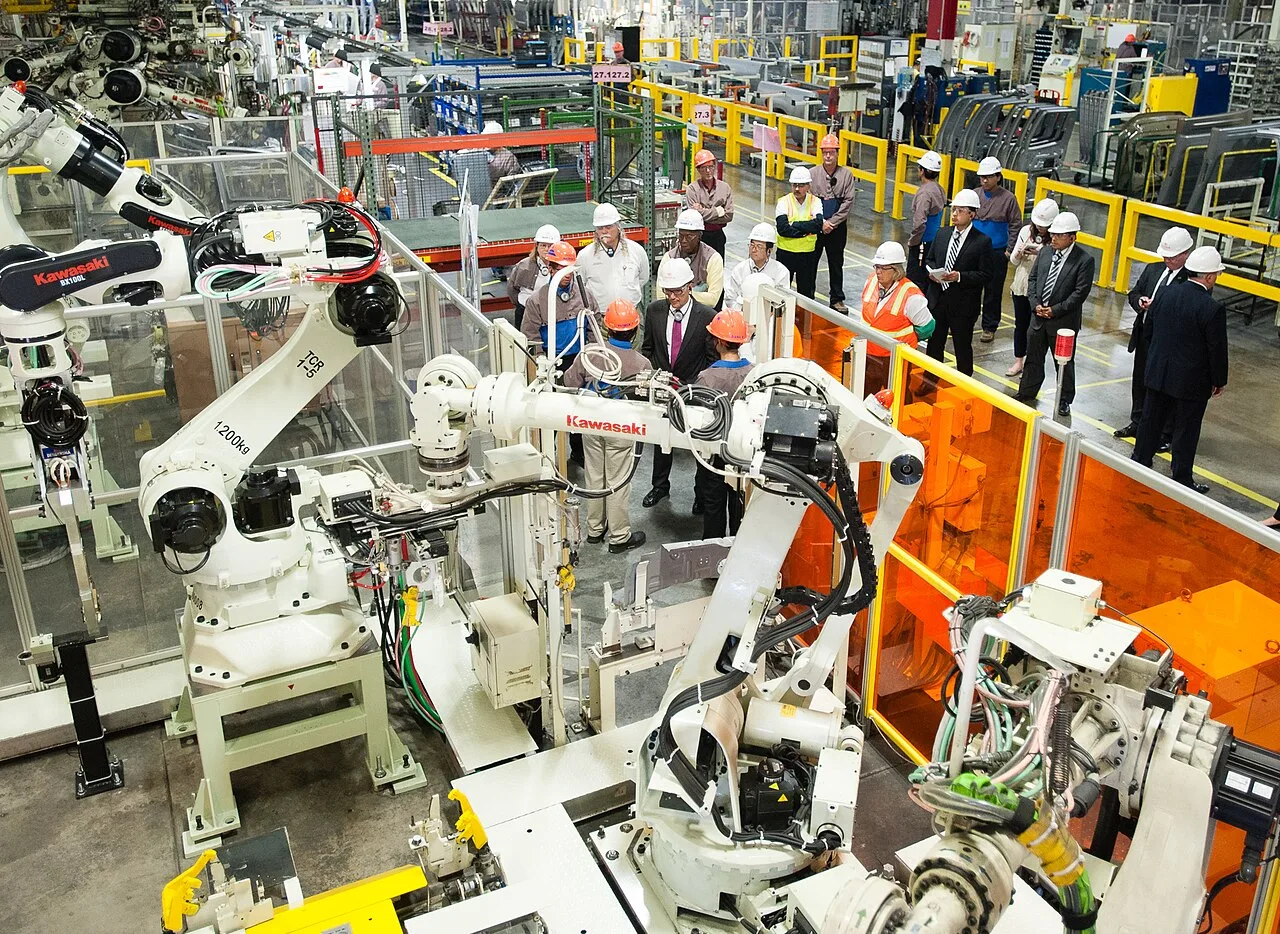
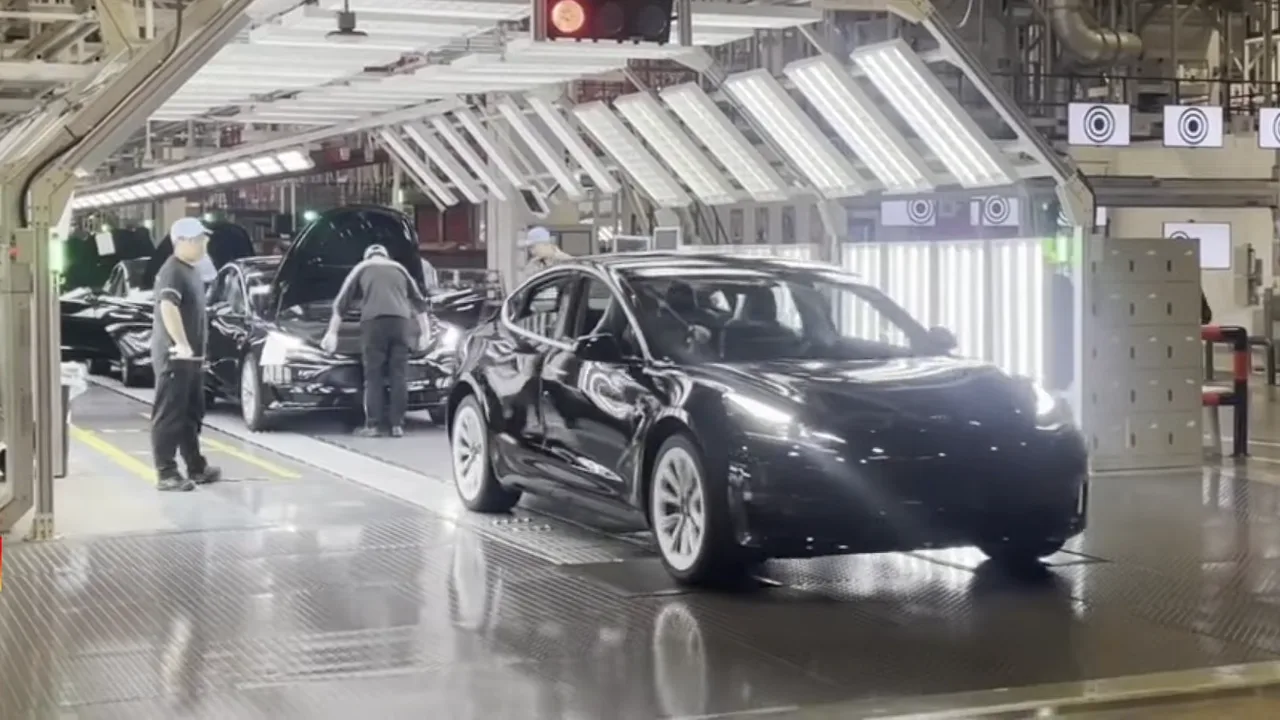
Both factory images in this guide are AI illustrations of the two archetypes, labeled as such.
Act I · The question

First, definitions — because the answer turns on them.

First, definitions, because the answer turns on them. Lean is not automation, and it is not speed. It is the systematic removal of waste (muda), unevenness (mura) and overburden (muri), built on flow, pull, built-in quality — and respect for people. A factory can be fast, cheap, spectacular, and not lean. Toyota’s own vocabulary makes the trap visible: its word is 自働化 — automation with a human touch, machines that stop and surface problems — deliberately not 自動化, plain automation. Toyota has famously removed robots where they hid problems. A dark factory can be the opposite of jidoka: waste frozen into place, with nobody left on the floor to see it.

Jidoka per LEI; the automation/autonomation distinction per Michel Baudin; Toyota’s robot-removal per Quartz and Toyota’s own materials.
Act II · Where China wins

Give China its two real victories.

Development speed is genuinely superior and conceded on all sides — Chinese programs run ~15–24 months against ~48 for Japanese OEMs, Japanese analysts publish the comparison themselves, and Toyota’s president calls China the fastest-evolving region with Toyota "in learning mode." We wrote a whole guide on it (The 18-Month Car). No serious analyst disputes this column.

東洋経済; Toyota statements via InsideEVs/Inside China Auto.
Act II · Where China wins

The second win: leaner cars, not leaner factories.

So is design leanness — leaner PRODUCT, not leaner process. Nikkei/Nagoya University teardowns of the BYD Seal found 8-in-1 integrated power units and astonishingly few ECUs: fewer parts, fewer interfaces, fewer coordination loops. That is genuine waste elimination — engineered into the car, not the factory. The nuance matters even at the crown-jewel plant: Tesla Shanghai — the world’s most productive car factory — lands roughly at per-worker parity with Toyota Georgetown once you count heads honestly (and it’s an American company’s plant). BYD’s line-rate and "98% automation" claims are PR-sourced and internally inconsistent; we flag rather than repeat them.

Teardowns per Nikkei BP; Shanghai/Georgetown figures per autoevolution and Toyota facility data.
Act III · The classic metrics

Now the metric lean was invented on: inventory.

Watch the bars at right. BYD carries ~110 days of inventory (March 2026, and worsening). Toyota carries ~42. On flow — the discipline TPS exists to create — the 70-year-old teacher holds roughly a 2.6× advantage over the celebrated student. Overproduction pressure, model churn and the push system behind China’s price war all show up in this one number.

GuruFocus computed from filings (TM, BYDDF); Toyota FY2025 results as primary.
Act III · The classic metrics

“But they’re so much more productive!” The data says no.

Rhodium decomposed BYD’s ~$4,700 per-car cost advantage: vertical integration ~$2,369, cheap engineering ~$1,719, supplier float ~$214, subsidies ~$292 — and stated flatly that the data do not support superior labor productivity. Tesla’s revenue per employee runs ~6–7× BYD’s; Chinese trade press itself calls BYD’s 人效 bottom-tier (with a vertical-integration caveat). The Harbour team’s number: labor cost per vehicle $585 in China vs $769 in Japan — wage arbitrage and design-for-cost, not hours-per-vehicle superiority.

Rhodium (Feb 2026); Oliver Wyman/Harbour; 中国汽车报 annual-report analysis.
Act III · The classic metrics

Quality: one real milestone, one stubborn gap.

Credit where due: in J.D. Power’s China IQS 2026, domestic brands beat international brands on initial quality for the first time — a genuine historic marker. But dependability — what breaks over years — still belongs to the teacher: FAW-Toyota led China’s 2025 VDS at 156 PP100 against ~202 for domestics, and Lexus has topped the US study three years running. Most telling: China’s industry-wide initial quality is declining as launch cadence accelerates — the 18-month clock, eating the quality column, measured.

J.D. Power China IQS 2025/2026 and VDS 2025; US VDS 2025.
Act IV · The muda

Zoom out: the waste Toyota was founded to refuse.

Now zoom out to the waste Toyota was founded to refuse. China’s auto industry runs ~72% capacity utilization (about 50% for some NEV segments); the 0公里二手车 — "zero-kilometer used car" — scandal is overproduction laundered through license plates at national scale, denounced by Geely’s own chairman; BYD’s dealer-vs-retail gap ran to roughly a million cars. Muda #1, industrialized. A lean practitioner doesn’t need a stopwatch to score this: overproduction is the first waste because it manufactures all the others — and China’s industry produces it at national scale while Toyota’s heijunka-and-pull discipline exists precisely to make it impossible.

CarNewsChina/南方都市报 on zero-km used cars; CNBC on the insurance-registration scheme; utilization per 经济日报.
Act IV · The muda

Suppliers and people: the two pillars, inspected.

The supplier system inverts JIT’s spirit: BYD’s 迪链 commercial paper pushes real payables to ~8–10 months — just-in-time achieved by moving the inventory and the financing onto suppliers’ balance sheets. Toyota’s supplier co-development model (black-box engineering, multi-decade relationships) is the thing Chinese OEMs are now being regulated toward, via the 60-day payment mandate. And the people pillar: And respect for people — a pillar, not a poster: BYD’s assembly model leans on low-cost manual labor with turnover-as-a-feature (a 2023 resignation wave hit when overtime — the pay — dried up; a 2026 EU probe examines its Hungary plant’s labor practices). Chinese EV engineering runs 6-day 12-hour norms. Whatever this is, it is not the TPS employment bargain.

迪链 mechanics per supplier-side documentation; China Labor Watch report; CNBC on the EU Hungary probe.
Act V · The verdict

The scorecard, kept honestly.

Eight dimensions, each sourced in this guide. China wins the two it genuinely owns — development speed and product-design leanness — and initial quality has converged. Toyota holds labor productivity, flow, dependability, overproduction discipline, and respect for people: five of the six things the word "lean" actually measures. Faster? Absolutely. Cheaper? Demonstrably. Leaner? Mostly no.

Act V · The verdict

If you doubt the verdict, ask BYD’s founder.

That’s the tell. Chinese industrial discourse still treats TPS as the gold standard; Japanese observers describe BYD as integrated and fast — never as lean. Meanwhile Toyota was "flabbergasted" by Chinese development speed and is copying it through its China Regional Chief Engineer system. Both sides are in learning mode — in opposite directions. That, not a winner, is the honest headline. One nuance for the record: "Toyota rejects dark factories" is true today but softening — its 未来工場 concepts target far higher automation in the 2030s. The philosophical gap may narrow from both ends.

Wang Chuanfu’s "future Toyota" ambition per the Interconnected profile; Toyota’s RCE copying per Inside China Auto.
Act V · The verdict

What we can’t know yet — said out loud.

What the evidence CANNOT yet say, disclosed plainly: no credible published hours-per-vehicle comparison exists between Chinese EV plants and Toyota; no Western lean expert has published a gemba report from inside a BYD, NIO or Zeekr plant; plant-level claims (line rates, automation percentages) are largely PR-sourced. The honest answer is built from financials, quality studies and industry data — not from walking the floors. Someone should walk the floors. The lean reading: China built the fastest, most integrated, most capital-intensive auto industry in history — and its own founders still aim at Toyota, because speed and integration answer different questions than flow, pull and people. "Leaner than Toyota?" Mostly no. "Worth studying as hard as Toyota?" Unquestionably yes. Go see — and if you do walk those floors, write it down. The literature is waiting for you.

Companions: The 18-Month Car · Parts Per Billion · How a Toyota plant works.
Two archetypesillustrative — the argument, not the plants
The challenger archetype: robot-dense, dark, spectacular.AI illustration
The challenger archetype: robot-dense, dark, spectacular.
The teacher archetype: people, andon cords, kaizen.AI illustration
The teacher archetype: people, andon cords, kaizen.
自働化 ≠ 自動化automation with a human touch vs plain automation — the distinction the whole question turns on

Hold that distinction: Toyota’s word is 自働化 — automation with a human touch, machines that stop and surface problems — not 自動化, plain automation. A dark factory can be the opposite of jidoka: waste frozen into place with nobody left to see it.

Toyota has removed robots where they hid problems — the "simple, slim, flexible" line philosophy — because a machine never files a kaizen suggestion.

Where China genuinely wins東洋経済 · Nikkei BP · Toyota statements
Chinese programs
~15–24 mo
Japanese OEMs
vehicle development, concept → launch — conceded by Japanese analysts
Toyota’s president on China: the fastest-evolving region — and Toyota is explicitly "in learning mode" on speed and cost, copying via Chinese chief engineers.
8-in-1
BYD’s integrated power unit — fewer parts, fewer interfaces (Nikkei teardown)
~37 s
a car off the line at Tesla Shanghai — the true line-speed crown
≈ parity
Shanghai vs Georgetown per worker, counted honestly

So is design leanness — leaner PRODUCT, not leaner process. Nikkei/Nagoya University teardowns of the BYD Seal found 8-in-1 integrated power units and astonishingly few ECUs: fewer parts, fewer interfaces, fewer coordination loops. That is genuine waste elimination — engineered into the car, not the factory.

The line-speed crown case is Tesla Shanghai: ~947k cars from ~20,000 workers, a car off the line every ~37 seconds. Two footnotes: per-worker it lands roughly at parity with Toyota Georgetown (~550k vehicles plus 600k engines from ~10k people) — and it is an American company’s plant. BYD line-rate claims (50–90s, "98% automation") are PR-sourced and internally inconsistent; flagged as such.

The classic lean metricsGuruFocus/filings · Rhodium · J.D. Power
BYD
110.7 days
Toyota
days of inventory, most recent filings — the flow metric TPS was built on
Days of inventory: BYD 110.67 (March 2026, worsening) vs Toyota ~42 (turnover ~2.17/quarter). On the metric lean was practically invented to improve, Toyota carries ~2.6× LESS.
~$292
of BYD’s ~$4,700 cost edge from direct subsidies (~6%) — Rhodium
6–7×
Tesla’s revenue per employee vs BYD’s
$585 vs $769
labor cost per vehicle, China vs Japan (Harbour) — arbitrage, not HPV

Rhodium’s decomposition of BYD’s ~$4,700 per-car cost edge: vertical integration ~$2,369, cheap engineering overhead ~$1,719, supplier-payment float ~$214, subsidies ~$292 — and it states flatly that the data do not support superior labor productivity. Tesla’s revenue per employee runs ~6–7× BYD’s; Chinese trade press itself describes BYD’s 人效 (labor efficiency) as bottom-tier, with a vertical-integration caveat. Oliver Wyman’s Harbour team: Chinese labor cost per vehicle $585 vs Japan’s $769 — wage arbitrage and design-for-cost, not hours-per-vehicle superiority.

2026
China IQS: domestics beat internationals on initial quality — first time ever
156 vs ~202
PP100 in China’s 2025 dependability study: FAW-Toyota vs domestic average
declining
China industry-wide initial quality as launch cadence accelerates

Quality is the most interesting column. The real milestone: in J.D. Power’s China IQS 2026, domestic brands beat international brands on initial quality for the first time. But dependability — what breaks over years — is still Toyota’s on both continents: FAW-Toyota led China’s 2025 VDS at 156 PP100 vs ~202 for domestics, and Lexus has topped the US VDS three years running. And China’s industry-wide initial quality is DECLINING as launch cadence accelerates — speed eating quality, measured.

The muda, at national scaleCarNewsChina · CNBC · supplier documentation
~72%
industry capacity utilization; ~50% in some NEV segments
0 km
"used" cars — overproduction laundered through license plates
~1M
BYD’s dealer-vs-retail gap at its peak
Now zoom out to the waste Toyota was founded to refuse. China’s auto industry runs ~72% capacity utilization (about 50% for some NEV segments); the 0公里二手车 — "zero-kilometer used car" — scandal is overproduction laundered through license plates at national scale, denounced by Geely’s own chairman; BYD’s dealer-vs-retail gap ran to roughly a million cars. Muda #1, industrialized.
The supplier pillar
The supplier system inverts JIT’s spirit: BYD’s 迪链 commercial paper pushes real payables to ~8–10 months — just-in-time achieved by moving the inventory and the financing onto suppliers’ balance sheets. Toyota’s supplier co-development model (black-box engineering, multi-decade relationships) is the thing Chinese OEMs are now being regulated toward, via the 60-day payment mandate.
The people pillar
And respect for people — a pillar, not a poster: BYD’s assembly model leans on low-cost manual labor with turnover-as-a-feature (a 2023 resignation wave hit when overtime — the pay — dried up; a 2026 EU probe examines its Hungary plant’s labor practices). Chinese EV engineering runs 6-day 12-hour norms. Whatever this is, it is not the TPS employment bargain.
The scorecardevery row sourced in this guide
Development speed~15–24 months vs ~48; conceded by Japanese analysts
CHINA
Product-design leanness8-in-1 integration, few ECUs — waste engineered out of the car
CHINA
Labor productivityNo HPV superiority in the data; revenue/employee gap; wage arbitrage
TPS
Inventory / flowBYD ~110 days vs Toyota ~42 — the classic lean metric
TPS
Initial qualityChina IQS 2026: domestics beat internationals for the first time
CONVERGED
DependabilityToyota/Lexus lead VDS on both continents; Chinese industry IQS declining with cadence
TPS
Overproduction discipline72% utilization, zero-km used cars vs heijunka/pull
TPS
Respect for peopleTurnover-as-feature, 896 norms vs stable-workforce bargain
TPS
比亚迪要做未来的丰田
"BYD’s goal is to be the future Toyota." — Wang Chuanfu, BYD founderthe tell: the challenger still aims at the teacher

That’s the tell. Chinese industrial discourse still treats TPS as the gold standard; Japanese observers describe BYD as integrated and fast — never as lean. Meanwhile Toyota was "flabbergasted" by Chinese development speed and is copying it through its China Regional Chief Engineer system. Both sides are in learning mode — in opposite directions. That, not a winner, is the honest headline.

Disclosed gaps
What the evidence CANNOT yet say, disclosed plainly: no credible published hours-per-vehicle comparison exists between Chinese EV plants and Toyota; no Western lean expert has published a gemba report from inside a BYD, NIO or Zeekr plant; plant-level claims (line rates, automation percentages) are largely PR-sourced. The honest answer is built from financials, quality studies and industry data — not from walking the floors. Someone should walk the floors.
The lean reading: China built the fastest, most integrated, most capital-intensive auto industry in history — and its own founders still aim at Toyota, because speed and integration answer different questions than flow, pull and people. "Leaner than Toyota?" Mostly no. "Worth studying as hard as Toyota?" Unquestionably yes.
Now it’s your move

Speed and lean answer different questions.

China built the fastest, most integrated auto industry in history — and its own founders still aim at Toyota, because flow, pull and people answer questions speed can’t. Study both. And if you ever walk those floors, publish what you see — the literature is genuinely missing it.

Good to know

Frequently asked

Are Chinese auto factories leaner than Toyota?
Mostly no — though they are demonstrably faster and cheaper. On the classic lean measures the evidence favors Toyota: inventory (~42 days vs BYD’s ~110), labor productivity (Rhodium finds no hours-per-vehicle superiority; Tesla’s revenue per employee runs 6–7× BYD’s), dependability (Toyota/Lexus lead the durability studies on both continents), overproduction discipline (China’s industry runs ~72% utilization with a "zero-kilometer used car" scandal), and workforce stability. China genuinely wins development speed (~15–24 vs ~48 months) and product-design leanness (8-in-1 integration, minimal ECUs).
Isn’t a fully automated "dark factory" the ultimate lean factory?
No — that is the category error at the heart of the question. Toyota’s term is 自働化 (jidoka, "automation with a human touch"): machines that stop and surface problems for humans to solve. Plain automation (自動化) can freeze waste into place with nobody left on the floor to see it. Toyota has famously removed robots where they hid problems, and while Chinese dark factories are spectacular, hyper-automation is a capital strategy, not a lean one.
How do BYD and Toyota compare on inventory?
BYD carried about 110.7 days of inventory as of March 2026 (and trending worse); Toyota carries roughly 42 days (quarterly turnover ~2.17). On flow — the metric the Toyota Production System was practically invented to improve — the teacher holds about a 2.6× advantage over the most celebrated student.
Didn’t Chinese brands just beat international brands on quality?
On initial quality, yes — a real milestone: J.D. Power’s China IQS 2026 showed domestic brands ahead of international brands for the first time. But dependability (what breaks over years) still belongs to Toyota: FAW-Toyota led China’s 2025 dependability study at 156 PP100 versus ~202 for domestic brands, and Lexus has topped the US study three years running. Notably, China’s industry-wide initial quality is declining as launch cadence accelerates.
What about Tesla’s Shanghai factory?
Giga Shanghai is the world’s most productive single car plant (~947k cars from ~20,000 workers, a vehicle off the line roughly every 37 seconds) — but counted per worker it lands near parity with Toyota Georgetown (~550k vehicles plus 600k engines from ~10k people), and it is an American company’s plant operating in China. It proves what a focused, EV-native plant can do; it does not prove Chinese OEMs out-produce Toyota per hour worked.
What evidence is missing from this comparison?
Disclosed plainly in the guide: there is no credible published hours-per-vehicle comparison between Chinese EV plants and Toyota; no Western lean expert has published a gemba report from inside a BYD, NIO or Zeekr plant; and plant-level claims (line rates, automation percentages) are largely PR-sourced. The verdict rests on financials, quality studies, and industry data — not floor walks. The definitive study remains unwritten.
What does BYD itself think of Toyota?
Founder Wang Chuanfu has said BYD’s goal is to be "the future Toyota" (比亚迪要做未来的丰田) — Chinese industrial discourse still treats TPS as the gold standard. Meanwhile Toyota, "flabbergasted" by Chinese development speed, is copying it through Chinese chief engineers. Both sides are in learning mode, in opposite directions — which is the honest headline.
MS
Matthew Savas

Founder of Kaizumi, an AI-powered Lean training platform. More about Matthew →

Updated July 12, 2026 · Drafted with AI assistance and reviewed by Matthew Savas for accuracy. Every statistic is dated and sourced (data as of 2026-07-12); the verdict is built from financials, quality studies and teardowns rather than PR claims; plant-level marketing figures are flagged, and the evidence gaps (no published HPV comparison, no gemba reports) are disclosed in the guide itself. Factory images are AI illustrations of the two archetypes, labeled as such.

References

Every statistic in this guide traces to one of the sources below · data as of 2026-07-12. Chinese titles are given as published.