Toyota’s next line.
Lines that stretch over a weekend. Unfinished cars that drive themselves through assembly. A gigapress with a 20-minute die change. And, in the same plant, a hot hatch built by hand in a takt-less cell. Toyota’s answer to China’s speed isn’t imitation — it’s old lean principles wearing new machinery, setbacks included.
While everyone watched China, Toyota rebuilt the line.
While China compressed development clocks, Toyota rebuilt its lines — quietly, with characteristic thrift. The 2015 TNGA production push set a target of ~40% lower plant investment than 2008 levels under the slogan "simple & slim": lower conveyance, shorter lines, equipment that moves. No keynotes, no renderings — mostly bolts, casters and removed conveyor pits. This guide walks the four breakthroughs that matter, with company claims flagged and the setbacks included, because the honest version is more instructive than the press release.
TNGA production targets per 2015 announcements (Daily Kanban’s "TPS 2.0" analysis). Images are AI illustrations.Takaoka Line 2: the line that stretches.
The best-documented result is Takaoka Line #2 — the 伸縮自在 ("stretchable") assembly line: equipment on casters, no pits in the floor, stations fed by a single cable and connector, AGVs instead of a fixed conveyor. It can be reconfigured over a weekend, and it was built at roughly half the cost of the conventional Line #1 beside it — detail independently documented by lean researcher Christoph Roser on site. And the payoff arrived on schedule: August 2025: Takaoka Line 1 became Japan’s first dedicated BEV assembly line (~100k/yr, the new bZ4X) — the flexible-plant thesis meeting the electric transition. A lean reader should notice what the innovation actually is — not speed, but changeover applied to the factory itself.
Independent detail per Christoph Roser’s on-site AllAboutLean series; BEV line per InsideEVs (2025).Then Toyota deleted the conveyor.
September 2023, Motomachi, the Monozukuri Workshop: partly-built BEVs — bare three-module platforms (front, center, rear) — drove themselves through assembly at 0.36 km/h, guided by plant cameras and LiDAR. No conveyor. The line is software. The stated targets, from production chief Kazuaki Shingo under the slogan 工程1/2 ("halve the processes"): processes −50%, plant investment −50%, production-prep lead time −50%, assembly hours per vehicle from ~10 to ~5. Company claims, unproven at production scale — flagged as such.
Monozukuri Workshop (Sept 2023) per Toyota newsroom and MONOist technical coverage.What’s demo, and what’s already running.
What is already real at Motomachi: finished cars drive themselves from the line to the yard (self-driving conveyance in production use), and VLR tire-lifting robots handle wheels. The conveyor-less middle — assembly itself — is the part still being proven. Why it matters to a lean reader: a conveyor is a fixed-capacity, fixed-sequence asset — the largest single constraint in any assembly hall. A line made of software and floor space can change length, takt and routing the way a kanban loop changes quantity.
Production-use conveyance and VLR robots per 自動運転ラボ and Toyota Times.Toyota gigacasts too — but look where it innovated.
Toyota’s gigacasting demo at Myochi: a rear-third underbody that took 86 parts and 33 processes cast as one piece in about 3 minutes. The characteristic Toyota move hides in the tooling: a die-change target of ~20 minutes, against an industry norm of ~24 hours. That is SMED — Shigeo Shingo’s single-minute exchange of die — applied to the largest casting machines on earth. Everyone gigacasts; only Toyota talked about the changeover first.
Myochi demo per CarBuzz/Toyota; die-change target per casting-industry coverage.The honest ledger: the flagship wobbled.
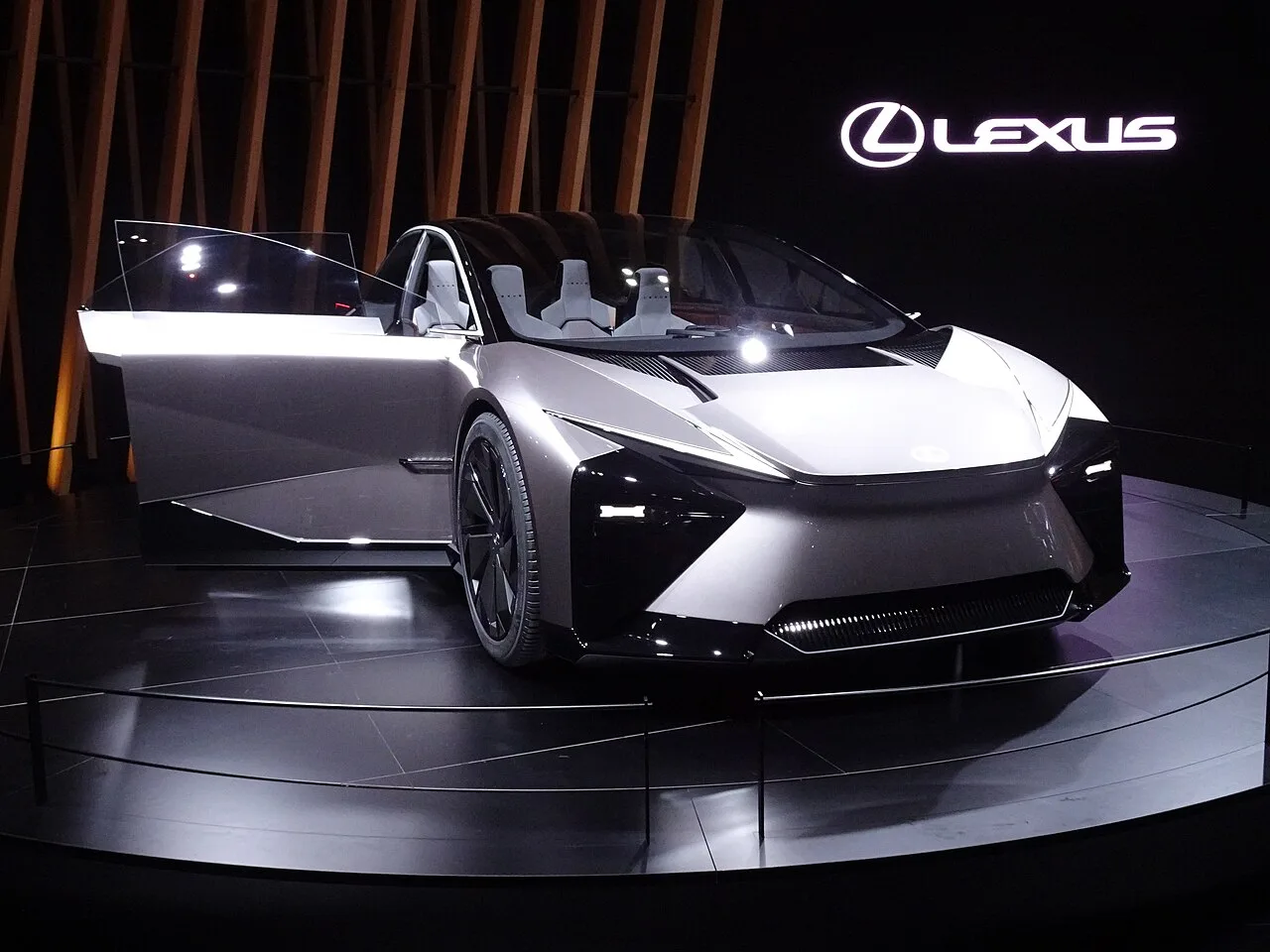
The honest ledger: the first gigacast flagship, the Lexus LF-ZC, slipped from 2026 to 2027 — and was cancelled in May–June 2026 amid an investment review. Toyota says gigacasting survives into a successor SUV. Meanwhile the current, conventionally-built bZ became the #3-selling EV in the US. The breakthrough is real; the product plan around it wobbled. The lesson isn’t that the technology failed — it’s that even Toyota’s production discipline lives inside product-plan reality, and an honest guide reports both.
Delay per Carscoops (Dec 2024); halt per Bloomberg (May 2026) and Electrek (Jun 2026).Same company, opposite pole: the takt-less cell.
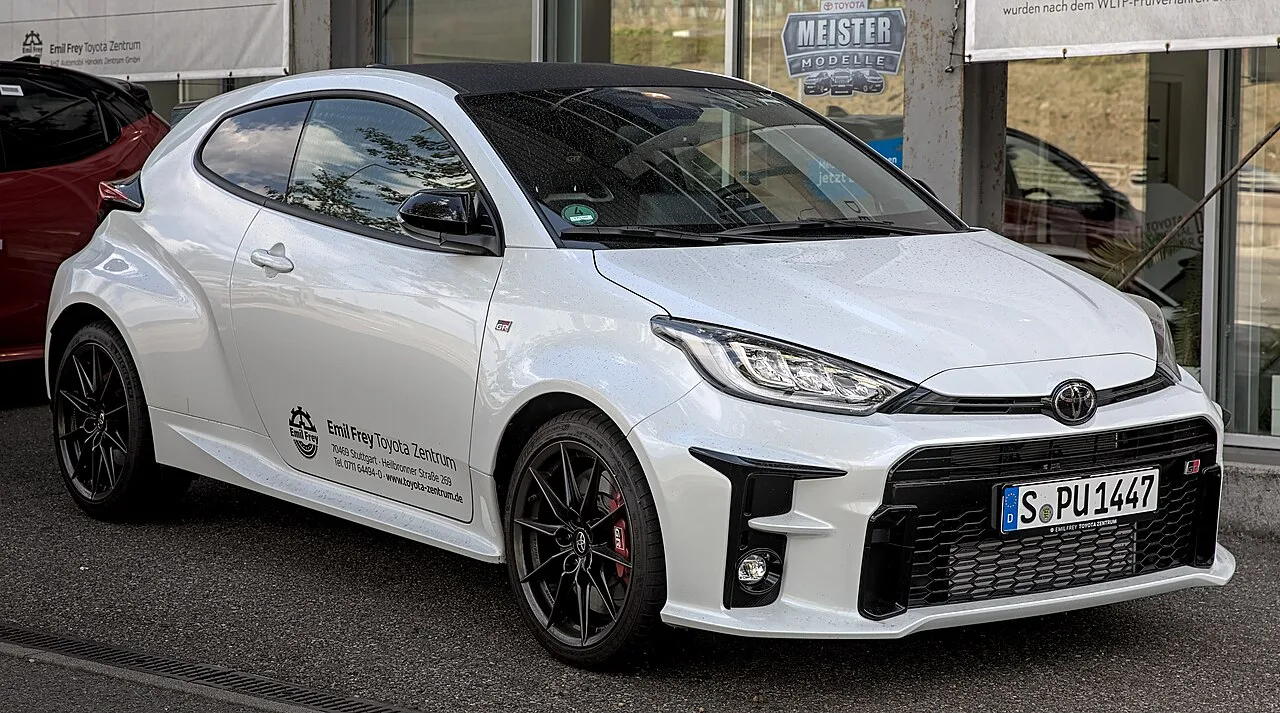
At the same company, the opposite experiment: the GR Factory at Motomachi builds GR Yaris and GR Corolla in takt-less, conveyor-less cells — skilled workers, cars on fixed stands, no line speed at all. Body welds increased from ~3,700 to ~4,500 for rigidity; 16 inspectors drive every car on a test course. It is the exact inverse of the self-driving line — and Toyota runs both, deliberately, in the same plant complex.
GR Factory per Toyota UK/Europe production materials.The constant underneath both extremes: people.
Hold both images at once: a hall where unfinished cars drive themselves, and a cell where craftsmen build a hot hatch like a watch. Toyota’s bet is that the future plant is not one philosophy — it is a portfolio, chosen per product, with people and flexibility as the constants. "To be the master of the machine, you have to have the skills to teach the machine." — Kawai Mitsuru. The GR cell and the karakuri dojo are the same idea at different scales: capability lives in people, and machines are what people teach.
Kawai per Toyota executive profile and Toyota Times; see also our karakuri guide.Every headline is an old lean principle in new machinery.
Read together, the breakthroughs are not imitation of China — they are TPS applied to Toyota’s own constraints: flexibility instead of raw speed (stretchable lines), SMED applied to gigacasting, conveyance treated as waste to be eliminated (self-propelled assembly), and craft preserved where the product demands it (GR cells). Every headline innovation is an old lean principle wearing new machinery. The tension is real and worth naming: −50% targets and software-defined lines strain the orthodoxy of standard work and takt; the gigacast product delays show even Toyota’s discipline meets program reality. Watching how Toyota resolves speed-vs-flow over the next five years is the best free education in manufacturing. Toyota publishes more of this than any automaker — plant tours, Toyota Times features, workshop demos. The syllabus is open. Go see. Go see.
Companions: How a Toyota plant works · The 18-Month Car · Leaner Than Toyota?The best-documented result is Takaoka Line #2 — the 伸縮自在 ("stretchable") assembly line: equipment on casters, no pits in the floor, stations fed by a single cable and connector, AGVs instead of a fixed conveyor. It can be reconfigured over a weekend, and it was built at roughly half the cost of the conventional Line #1 beside it — detail independently documented by lean researcher Christoph Roser on site.
AI illustrationThe honest ledger: the first gigacast flagship, the Lexus LF-ZC, slipped from 2026 to 2027 — and was cancelled in May–June 2026 amid an investment review. Toyota says gigacasting survives into a successor SUV. Meanwhile the current, conventionally-built bZ became the #3-selling EV in the US. The breakthrough is real; the product plan around it wobbled.
AI illustrationHold both images at once: a hall where unfinished cars drive themselves, and a cell where craftsmen build a hot hatch like a watch. Toyota’s bet is that the future plant is not one philosophy — it is a portfolio, chosen per product, with people and flexibility as the constants.

Old principles. New machinery. Open syllabus.
Toyota publishes more of its production thinking than any automaker on earth — the workshops, the plant tours, the setbacks. Watching it resolve speed-versus-flow this decade is the best free education in manufacturing. Go see.
How a Toyota plant works
The baseline system these breakthroughs are evolving from.
kaizumi.com/guides/toyota-assemblyKarakuri
The gravity-powered other half of Toyota’s plant philosophy.
kaizumi.com/guides/karakuriThe 18-Month Car
The competitive clock all of this is answering.
kaizumi.com/guides/the-18-month-carTrain your team
AI-built lean training for your industry, your roles, your reality.
kaizumi.comFrequently asked
- What is Toyota’s "stretchable" assembly line?
- Takaoka Line 2, part of the TNGA "simple & slim" production push: assembly equipment on casters instead of anchored to pits, each station fed by a single cable and connector, AGVs instead of a fixed conveyor. The line can lengthen, shorten or reconfigure over a weekend, and was built at roughly half the cost of the conventional line beside it — details documented on site by lean researcher Christoph Roser. In 2025 the adjacent Line 1 became Japan’s first dedicated BEV assembly line.
- Do Toyota’s cars really drive themselves through assembly?
- In demonstration, yes: at the September 2023 Monozukuri Workshop, partly-built BEV platforms drove themselves through assembly at 0.36 km/h, guided by plant cameras and LiDAR — no conveyor. The stated targets ("halve the processes," 工程1/2) are −50% on processes, plant investment and lead time, with assembly hours falling from ~10 to ~5 per vehicle — company claims not yet proven at production scale. What is already in production use at Motomachi: finished cars driving themselves from line to yard, and tire-lifting robots.
- What is special about Toyota’s gigacasting?
- Everyone gigacasts; Toyota’s distinctive move is the changeover. Its Myochi demonstration cast a rear underbody replacing 86 parts and 33 processes in about 3 minutes — and targets a die change of ~20 minutes against an industry norm of ~24 hours. That is SMED (single-minute exchange of die) applied to the largest casting machines in the industry, preserving mix flexibility that dedicated gigacast lines give up.
- Didn’t Toyota cancel its gigacast EV?
- The first gigacast flagship — the Lexus LF-ZC — slipped from 2026 to 2027 and was then cancelled in May–June 2026 amid a broader investment review (Bloomberg, Nikkei). Toyota says gigacasting continues into a successor SUV, and meanwhile its conventionally-built bZ became a top-3 selling EV in the US. The guide reports the setback alongside the technology because the honest version is more instructive.
- What is the GR Factory?
- Toyota’s deliberate counter-trend at Motomachi: GR Yaris and GR Corolla are built in takt-less, conveyor-less cells — cars on fixed stands, skilled workers, no line speed. Body welds increased from ~3,700 to ~4,500 for rigidity, and 16 inspectors drive every car on a test course. Held next to the self-driving line, it shows Toyota’s actual thesis: the future plant is a portfolio of methods chosen per product, with people and flexibility as the constants.
- How do these breakthroughs relate to classic TPS?
- Each one is an old principle wearing new machinery: the stretchable line is changeover thinking applied to the factory itself; the 20-minute gigacast die is SMED; self-propelled assembly attacks conveyance — a classic waste — at its root; and the GR cell preserves craft where the product demands it. The genuine tension — −50% targets and software-defined lines versus the orthodoxy of standard work and takt — is named in the guide rather than smoothed over.
Founder of Kaizumi, an AI-powered Lean training platform. More about Matthew →
Updated July 12, 2026 · Drafted with AI assistance and reviewed by Matthew Savas for accuracy. Every statistic is dated and sourced (data as of 2026-07-12); the −50% targets and line-rate figures are flagged as company claims where unproven at scale; the Lexus EV cancellation is reported alongside the technology; and the two plant images are AI illustrations, labeled as such.
References
Every statistic in this guide traces to one of the sources below · data as of 2026-07-12. Chinese titles are given as published.
Flexible lines (TNGA → Takaoka)
- AllAboutLean (Roser) — the evolution of the Toyota assembly line, on site at Takaoka
- AllAboutLean (Roser) — Toyota’s flexible assembly line in detail (casters, no pits, single cable)
- Michel Baudin — commentary on Roser’s Takaoka findings
- Daily Kanban — TNGA as "TPS 2.0": the ~40% plant-investment target (2015)
- InsideEVs — Takaoka Line 1 becomes Japan’s first dedicated BEV line (2025)
Self-propelled assembly & the workshop
- Toyota — Monozukuri Workshop announcement (Sept 2023): 工程1/2, self-propelled assembly
- MONOist — technical detail: 0.36 km/h self-driving BEV platforms, camera/LiDAR guidance
- Assembly Magazine — Toyota outlines future production processes
- 自動運転ラボ — self-driving conveyance and VLR robots in production at Motomachi
- Toyota Times — the future plant features (assembly hours 10→5 target)
Gigacasting & the honest ledger
- CarBuzz — Toyota’s gigapress: a third of a car in ~3 minutes (86 parts → 1)
- Castings SA — the ~20-minute die-change target vs ~24-hour norm
- Carscoops — next-gen Lexus EVs pushed to 2027 (Dec 2024)
- Bloomberg — Toyota halts Lexus EV plans under investment review (May 2026)
- Electrek — "Toyota pulls plug on its most important EVs" (Jun 2026)