
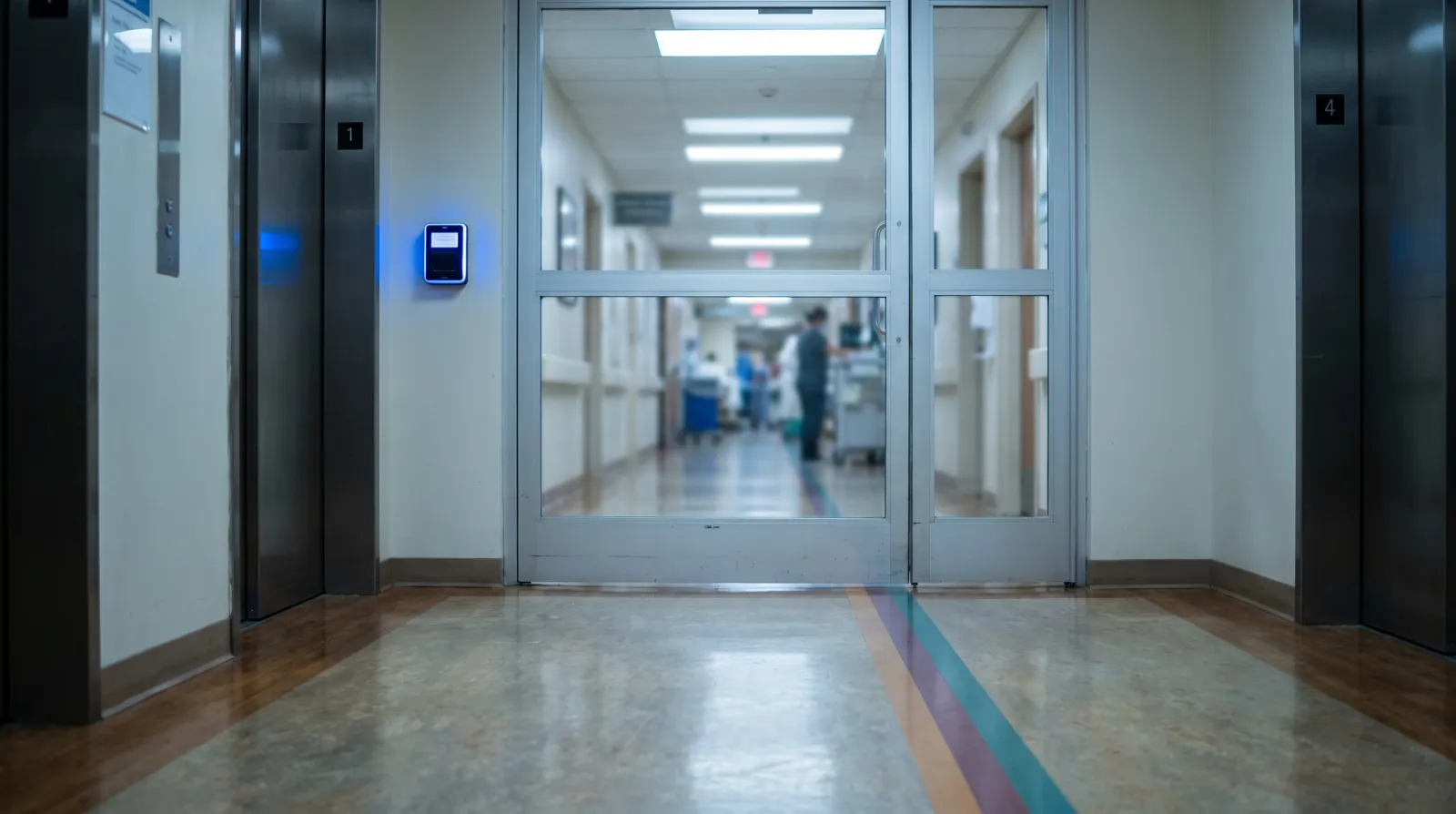
The Gemba Walk
You have one hour on a med-surg unit. What you see — and what you say — is up to you.
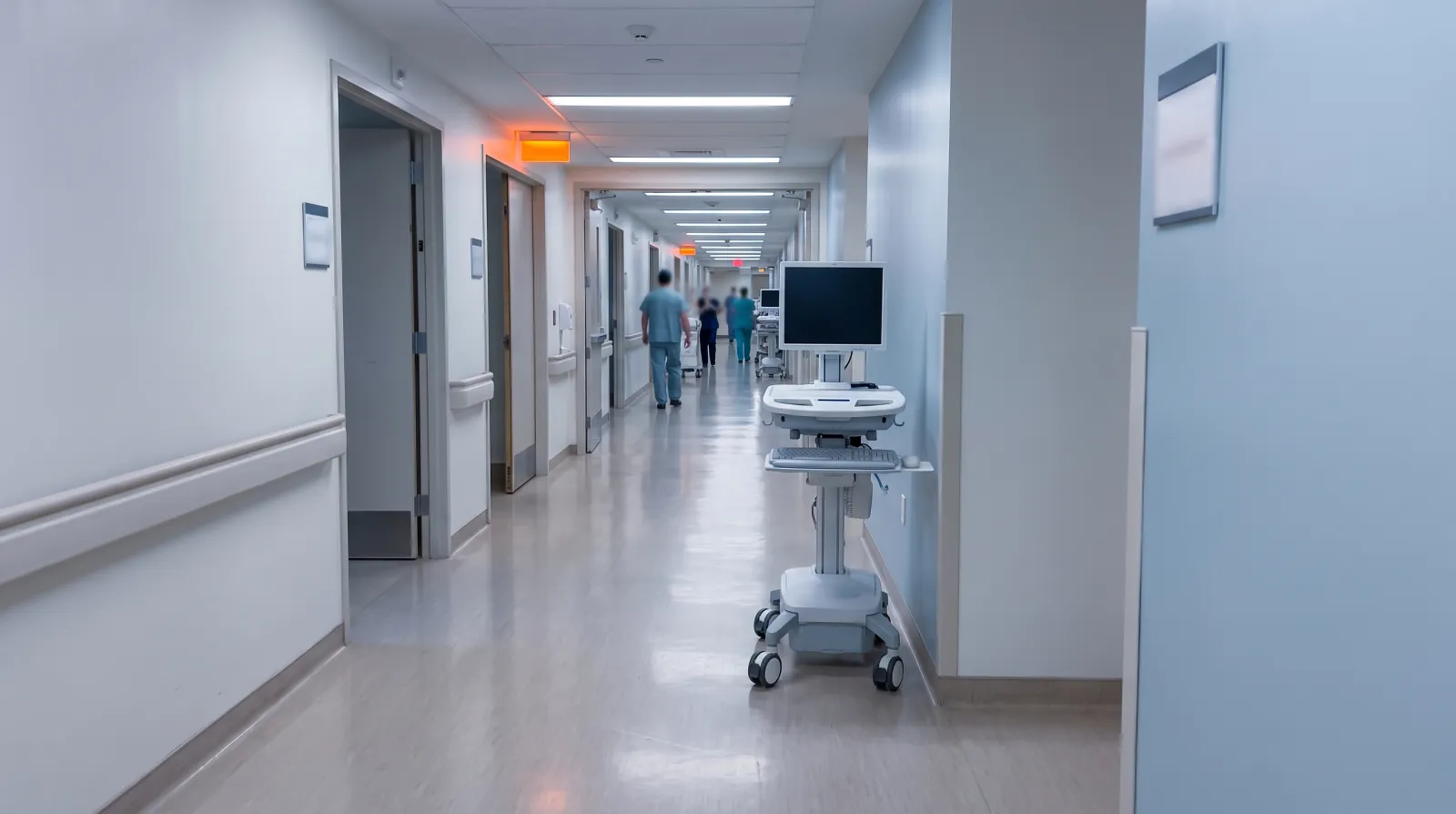
Go to where the work is.
“Gemba” is Japanese for “the actual place” — the spot where value actually gets created. In a hospital that’s the unit, the bedside, the supply room; it is never the conference room down the hall. A report exists to compress a whole shift into a handful of numbers, and compression always throws something away. The dashboard can tell you WHAT happened — charting compliance sits at 71% this week — but only the unit can show you WHY. Stand in the hallway for ten minutes and you’ll find it: a charting cart with a dead battery, quietly down since March, so every nurse on the floor is scribbling meds onto scraps of paper and rebuilding the record from memory at the end of a twelve-hour shift. The number and its cause live in two different places entirely. Reports say what; only the gemba shows why — and you only learn the second one by standing where the work happens.
This isn’t rounding. It isn’t an audit.
Three things get mistaken for a gemba walk, and each one misses on purpose. Executive rounding checks in on patients. A compliance audit checks the floor against a written standard. Management by walking around builds general visibility — a friendly face, a sense of the place. A gemba walk asks for more than any of the three, and it’s harder: go see the actual work, ask why it works the way it does, and respect the people doing it enough to believe they are not the problem. You are not there to verify, and you are not there to be seen. You are there as a student of the work, and the nurses, techs, and charge nurse you’re about to meet are the faculty — the only people on the unit who actually know how the work really goes, moment to moment, workaround to workaround.
The rules you’re about to live.
Five rules, and you’ll be tested on all of them before this walk is over. Observe before you ask — spend real time watching before you open your mouth. Ask about the process, never the person — “walk me through it,” not “why are you behind.” Don’t fix on the spot — solving one instance quietly teaches the unit that problems only move when a leader happens to be standing there. Don’t correct anyone publicly — a hallway correction becomes the story of the visit, and the story crowds out everything you actually learned. And leave with commitments, then come back and close them — a walk with no follow-up is theater, no matter how respectfully it was conducted. Easy enough to nod along with here. Considerably harder inside a real unit, with a charge nurse watching to see if you mean it. See for yourself.
What do you expect the biggest problem on this unit to be?
Make your prediction above before the doors open.
The double doors
The double doors
Announce yourself honestly.
Renata Cole
The charge nurse looks up from the desk as the doors open. "Can I help you?"
The charge nurse looks up from the desk as the doors open. "Can I help you?"
The charge nurse looks up from the desk as the doors open. "Can I help you?"
- "Morning — I’m trying to understand how work actually happens up here, not how the org chart says it does. Is now a terrible time?"
Renata half-smiles. "It’s always a terrible time. But sure — just stay out of the med room doorway and ask before you touch anything." She goes back to her screen, but she’s left the door open.
You told the truth about why you’re here and asked permission to be on her unit. On a Gemba walk you are a guest in someone else’s workplace. Purpose stated + permission asked is what "respect for people" looks like in the first ten seconds.
- "We’re doing leadership rounds this morning. I’ll need a few minutes of your time."
"Of course." Renata’s voice goes flat and professional. Somewhere behind you, a conversation between two nurses stops. Word will move faster than you do: leadership is up here checking on us.
"Rounds" and "I’ll need" framed this as an inspection. Nothing you see for the next hour will be normal work — it will be work performed for an inspector. The data you came for just degraded.
- Nod politely and slip past — better to observe before anyone adjusts to you.
You get thirty seconds of unobserved reality. Then a nurse clocks the badge and the lanyard, and now the story is that leadership is sneaking around the unit. Renata watches you from the desk.
Observing unannounced feels scientific, but on a unit this size you were always going to be spotted. Covert observation reads as surveillance — the opposite of the trust a walk is meant to build.
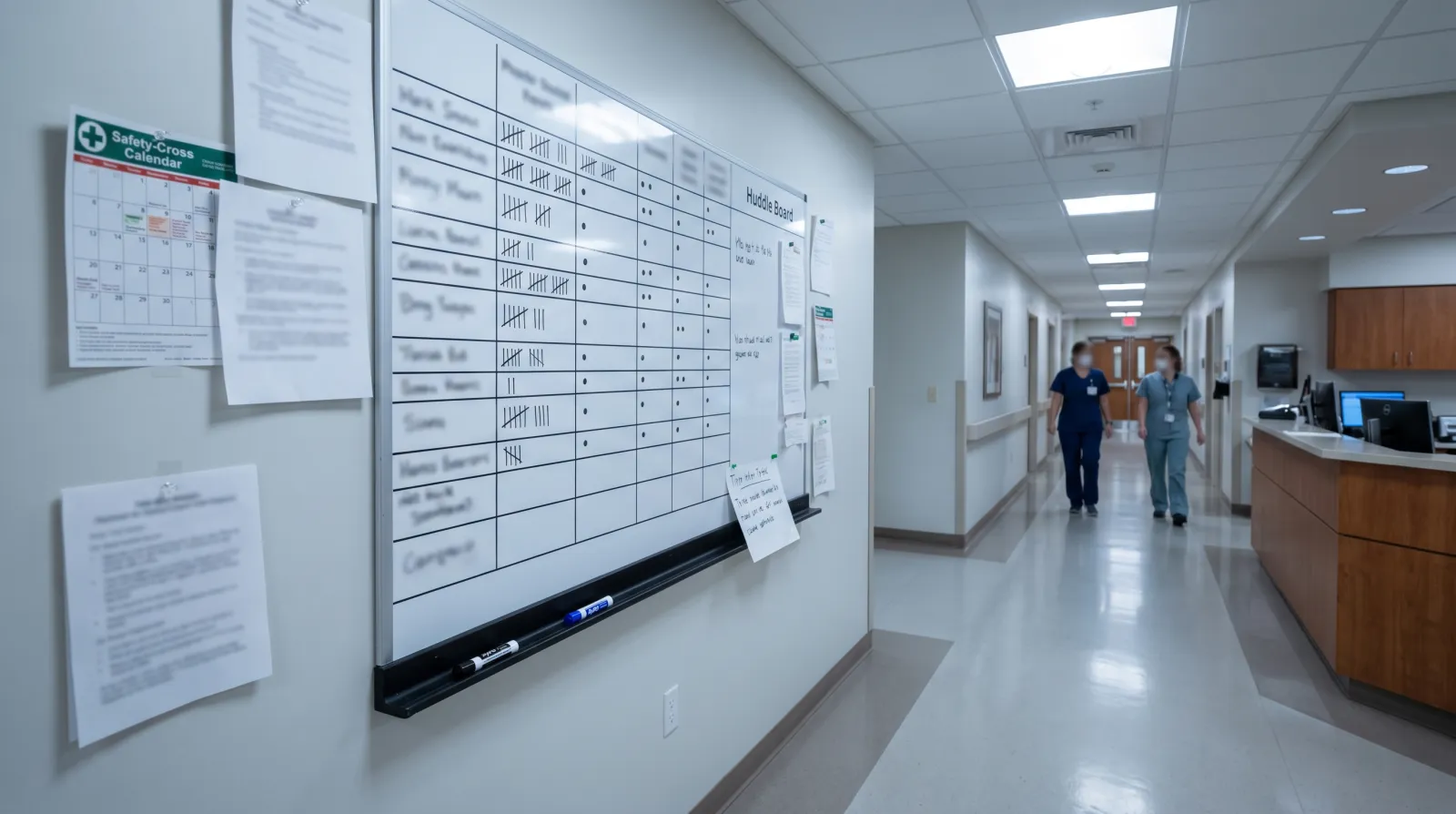
The huddle board
The board tells you if the management system is alive.
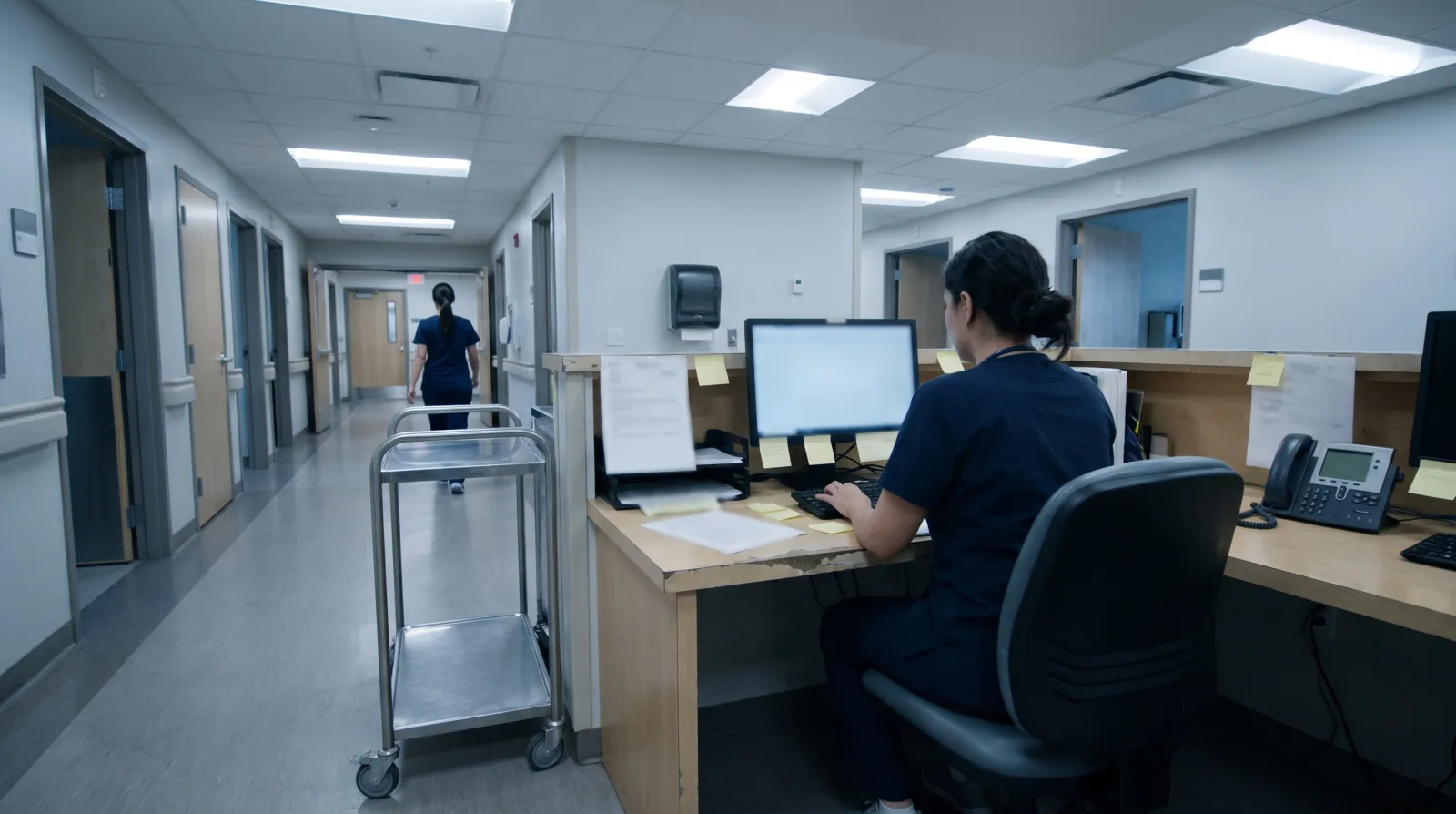
The nurse station
Observe first — then ask about the process, not the person.
Renata Cole
Renata appears at your elbow, arms folded. "Finding what you came for?"
Renata comes over. "That’s Keisha — she’s catching up her charting. What are you looking at?"
Renata comes over and follows your eyes. "You’re watching the charting thing, aren’t you. Go ahead — ask."
- "Why is your team behind on charting?"
Renata’s shoulders square. "We’re not behind. We chart when it’s physically possible to chart." She answers your next two questions in single sentences. The conversation is over; it just hasn’t stopped yet.
It sounded like a fair question — that’s what makes it dangerous. "Why are YOU behind" locates the problem in the person. She heard an accusation, and you lost access to everything she knows. Blame is expensive.
- "Walk me through what happens between giving a med and charting it."
Renata actually turns to face you. "Okay — so. You give the med in room 12. The charting cart’s battery died in March and the replacement is ‘on order.’ So you write it on whatever’s in your pocket and enter it at end of shift, from memory, for eleven patients." She pauses. "Nobody’s ever asked me that before."
Same topic, opposite question. "Walk me through the process" assumes the system is the cause and the person is the expert witness. You got the dead battery, the March date, and an ally — none of which the blame question would have surfaced.
- Say nothing. Keep watching.
You watch for another two minutes. The nurse checks her pocket notes three separate times for one chart entry. Renata watches you watching, and relaxes slightly — you’re not here to pounce.
Silence is a legitimate move — Ohno drew circles on the floor for exactly this. But it’s a delay, not an answer: at some point you must ask, and asking is how the people in the work learn you actually want to understand it.
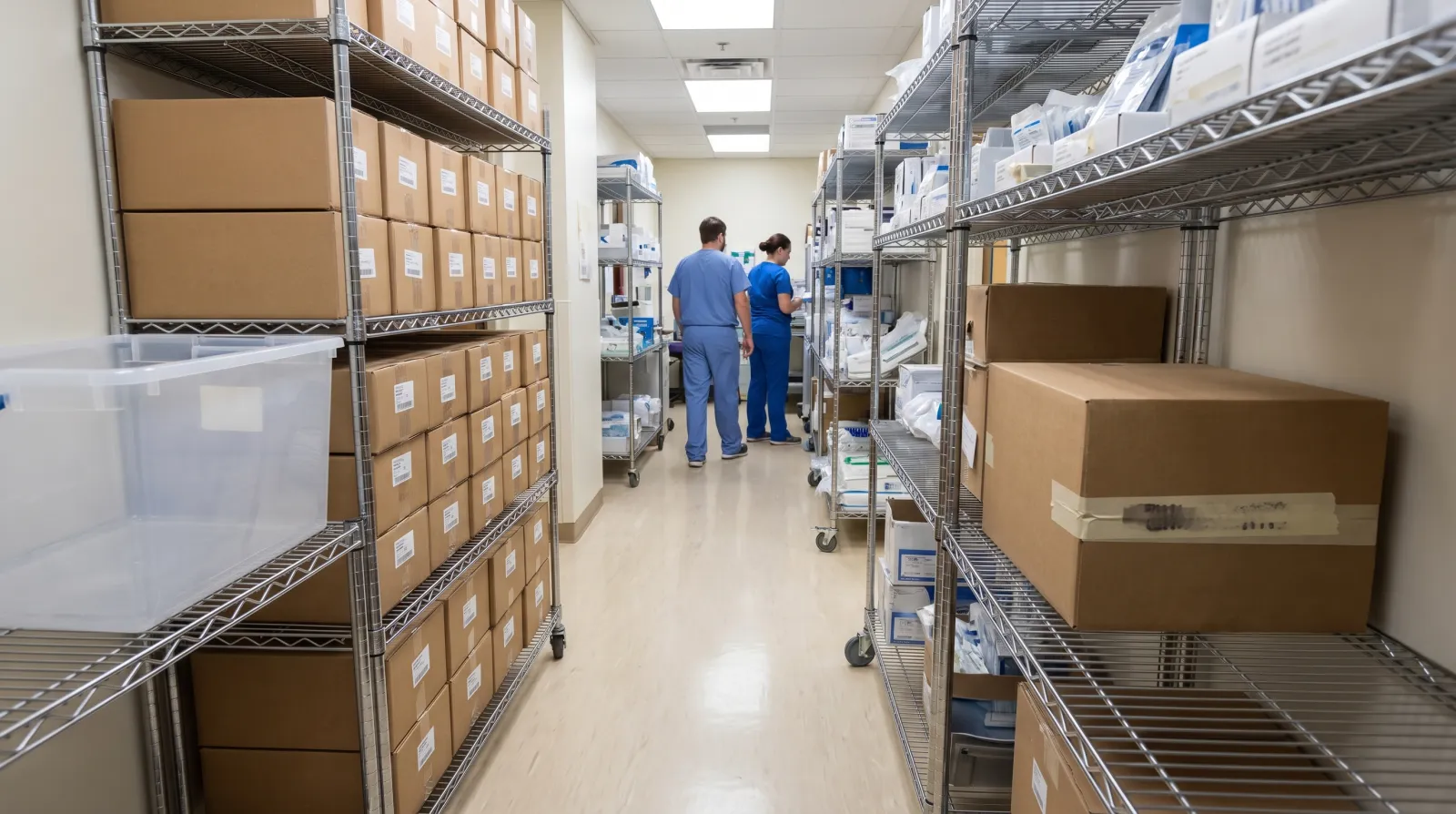
The supply room
Workarounds are information, not violations.
Marcus Webb
The supply tech restocking the far shelf gives you a careful nod and keeps working, back half-turned.
The supply tech looks over. "Help you find something? I’m Marcus — I do materials for this floor."
The supply tech grins. "You’re the one asking real questions upstairs. Marcus. Come look at this mess with me."
- "These personal stashes violate stock policy. They need to go."
"Yes sir. I’ll take care of it." Marcus takes the box down. Tomorrow there will be a new box, better hidden, and Marcus will never volunteer anything to you again. You were right about the policy and learned nothing about the problem.
Enforcing the rule destroyed the evidence. The stash was the most honest data point in the room — it marked exactly where the official system fails. Kill the workaround without fixing its cause and the cause just goes underground.
- "Help me understand — what does that box fix?"
Marcus glances at the door, then talks. "Par levels were set two years ago in a budget push — finance owns the numbers. There’s a form to request a change. I’ve filed it four times." He shrugs. "The stash is 4B’s answer to my form."
Five whys, one question at a time. The stash traced back through par levels to a decision process with no feedback loop — a fix no amount of shelf discipline can touch. The workaround told you where to look; the person who lives with it told you why.
- Keep watching him restock.
Marcus works the shelf. When he reaches the empty dressing-kit bin, he doesn’t even pause — just skips it. He already knows the order has been "in process" for a week. Everyone has stopped expecting the system to work.
What people skip is as loud as what they do. The unremarked empty bin means the failure is fully normalized — the most dangerous state, because nobody reports what nobody notices anymore.
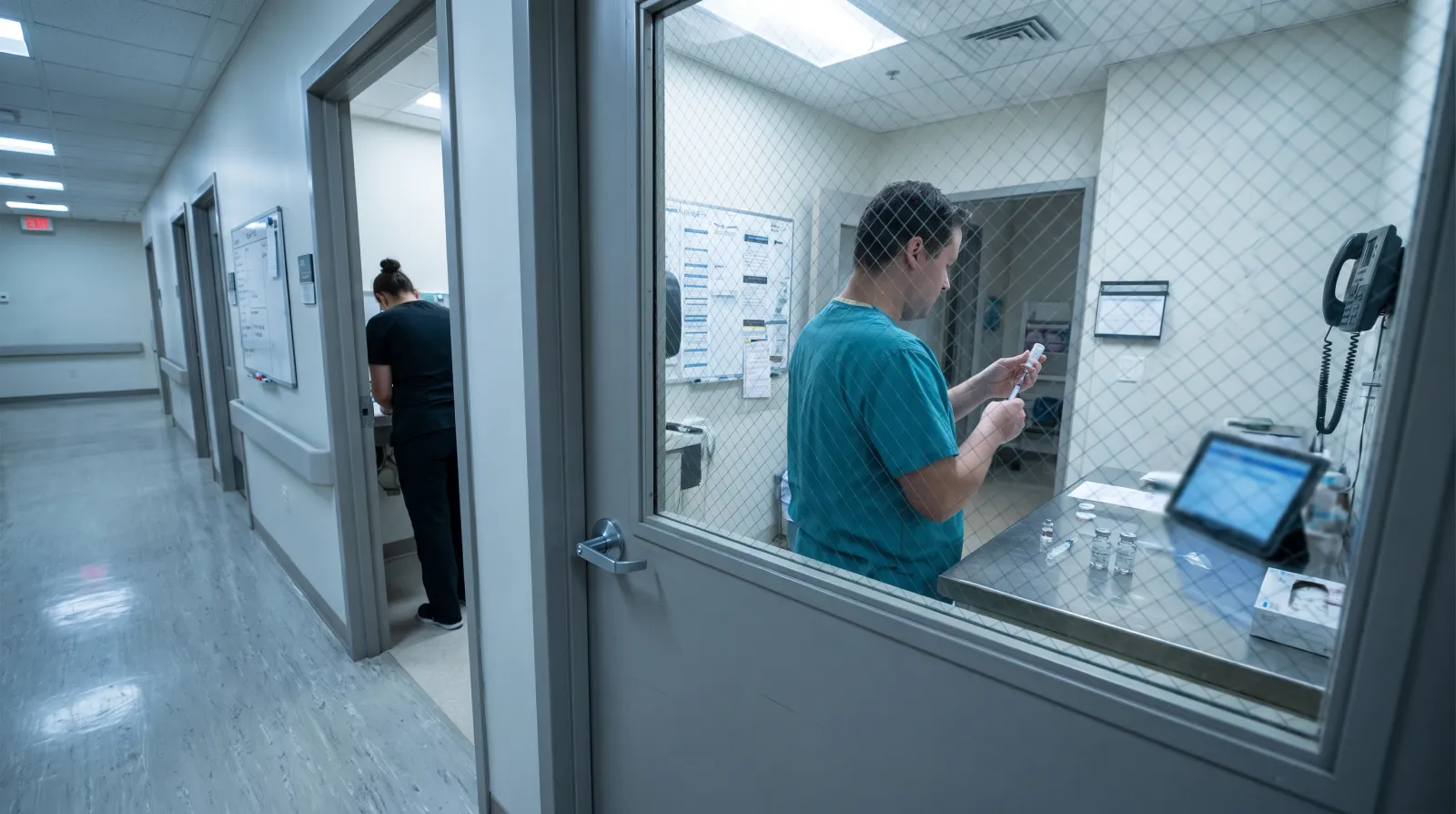
The med room window
Don’t fix on the spot — see the system.
She caps the syringe, pushes the door open, and turns down the hall — the moment is leaving with her.
- "Hold on — I saw that. You just signed a double-check alone."
She freezes, syringe tray in hand, in the middle of the corridor with two colleagues watching. "I— there wasn’t anyone free." Whatever you say next, what the unit will remember is that leadership ambushed a nurse over meds in the hallway.
You saw a real safety problem — and turned it into a public verdict on one nurse. The skipped check will now be hidden from you, not fixed. Safety problems named in public become secrets; named in private, with curiosity, they become data.
- "Excuse me — 30 seconds? I watched you get interrupted twice in there. Is that a normal draw-up?"
"Normal?" Priya laughs, tired. "That was a QUIET one." She tells you about the phone, the doorway, the second-check math on a short-staffed shift — talking fast, like she’s been waiting for someone to ask. "We’ve asked for a no-interruption rule for a year."
You named what you observed — the interruptions, not the person — and asked if it was normal. "Is that normal?" is one of the best questions on any walk: it converts one observation into the unit’s whole distribution, told by the expert who lives it.
- "I can be your second check right now — I’m trained. Let’s do it properly."
Priya blinks. "…Sure." You verify and countersign. The task is safe; the system is exactly as broken as it was five minutes ago, and today it learned that the workaround for a missing second nurse is a passing executive.
The leader-as-hero trap: solving the instance feels responsible and changes nothing. You are not on the unit tomorrow. Fix-on-the-spot also quietly tells the team their problems only move when someone senior happens to walk by.
- Let her go.
She disappears around the corner. The observation is still yours — but the chance to hear how she experiences it is gone; the walk moves on without her voice.
Observation windows are perishable. You should never interrupt a nurse mid-preparation — but she had finished. The moment after the work is exactly when a respectful question lands. Hesitate past it and you keep a note instead of an understanding.
The exit conversation
A walk without follow-up is theater.
- "Thanks for stopping by." Renata is already looking back at her screen. The doors close behind you on a unit that will describe this visit as an inspection it survived.
- "So… did you find what you needed?" Renata asks it carefully, still deciding what kind of visit this was. What you do in the next two weeks will answer her.
- Renata walks you to the doors. "Most people who come up here take notes and vanish." She holds the door. "Come back and tell me what happened to that battery order — I’ll hold you to it."
Predictions
- Staffing — there just aren’t enough nurses: You predicted a people shortage. What the walk actually showed: nurses losing whole hours to a dead cart battery, a supply system nobody can change, and interruptions built into the med process. The unit doesn’t need more people as much as it needs the system to stop taking the people it has.
- Supplies — the right stuff isn’t where it’s needed: You predicted supplies — and you saw it: overstock beside stockouts, a par-level process frozen for two years. But notice the walk showed you the cause was a decision process, not a warehouse problem.
- Discharges — beds stay blocked too long: You predicted discharge delays. The walk didn’t reach discharge — a real reminder that one walk shows you one slice. That’s why leaders walk on a cadence, not once.
- Discipline — people aren’t following the standard: You predicted a discipline problem. Every "violation" you found — the stash, the paper scraps standing in for the chart, the skipped second check — turned out to be a workaround for a broken process. The people were compensating FOR the system, not failing it.
Follow-up commitments
- The charting-cart battery: Find where the March battery order died, unstick it this week, and tell Renata the date it will arrive.
- Par-level review: Get materials + finance + one 4B nurse in a room to re-set par levels against actual usage — and build a standing review so it never freezes for two years again.
- Protected med prep: Sponsor the no-interruption convention the nurses already asked for: a visual signal, phone coverage during draw-ups, and a doorway norm.
- The huddle board: Ask the team what THEY would track if the board were theirs — don’t relaunch it top-down. A board revived for leadership dies again in a month.
- Charting time in the shift: Work with Renata to plan realistic charting windows into the shift, instead of pretending real-time charting happens on its own.
The model walk
Stated purpose, asked permission, and asked the charge nurse when a bad moment would be — then avoided it.
Found all fourteen observations across the unit — but wrote down only patterns, never names.
Asked only process questions ("walk me through…", "is that normal?", "what would have to be true…") and one silence.
Fixed nothing on the spot. Wrote down everything, promised two things, and named the date they’d be back.
Returned in twelve days with the battery order closed and the par-level meeting booked — and did the next walk a month later.
- The date on the metrics: The huddle metrics were last updated three days ago. A board nobody updates is a board nobody uses — the huddle happens (maybe), but the numbers aren’t part of anyone’s decisions.
- The safety cross: The monthly safety cross has blank days scattered through it. Not incidents — blanks. Either nothing is being recorded, or recording stopped mattering. Both are findings.
- The taped-up note: A hand-written note taped beside the board: a phone extension crossed out twice, replaced. When the official system stops working, tape and marker fill the gap. Every taped note on a wall is a small system failure, preserved as evidence.
- Charting from scraps: A nurse is charting from a pocketful of paper scraps — meds given hours ago, reconstructed from memory and shorthand. Real-time charting is the standard; this is the reality. The gap is the interesting part.
- The phone: The desk phone has rung four times since you arrived. Nobody owns answering it — whoever cracks first picks it up, mid-task. Count the interruptions per hour and you’ve measured a workload nobody planned.
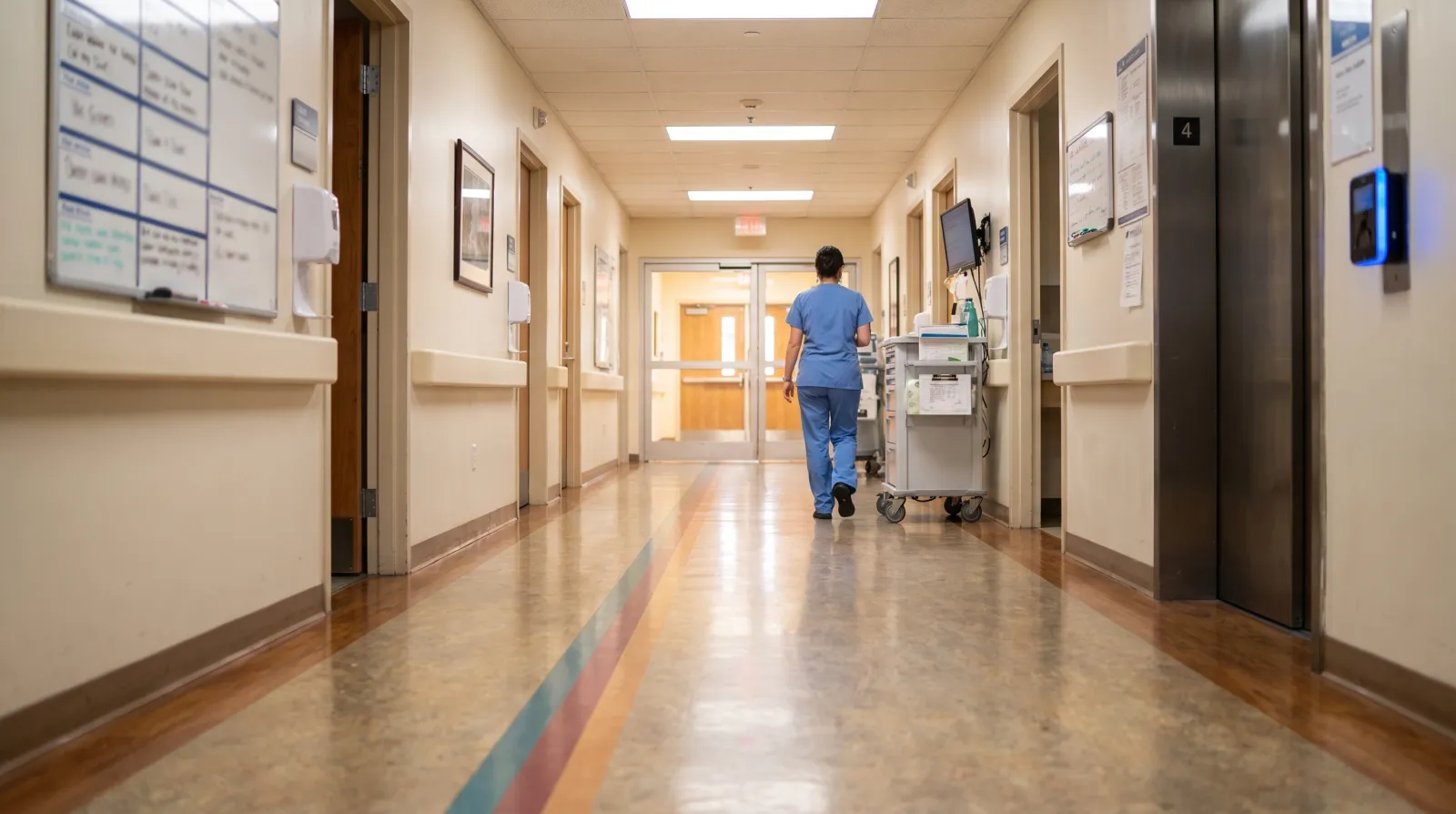
- The parked cart: A supply cart is parked half-across the corridor — not laziness, there’s simply nowhere designated for it. Everyone walks around it. Walking around problems is what normal feels like after a while.
- The long walk: In the time you’ve stood here, the same nurse has made three trips to the supply room at the far end. If you sketched her path it would look like spaghetti. Distance is a tax paid in nursing minutes.
- The wall of one item: Saline flush syringes, floor to shoulder height — months of supply. Cash sleeping on a shelf, and every box is one more thing to count, move, and expire.
- The empty bin: Directly beside the overstock: the dressing-kit bin, empty. Feast and famine on the same shelf is the signature of a replenishment system that runs on schedules and guesses instead of actual usage.
- The back row: The back row of kits is past its expiry date. Nobody rotated stock — because nobody has time, because they’re busy hunting for the items that ran out. The system eats its own margin.
- The taped-label box: A cardboard box with "4B — DO NOT TOUCH" in marker: a nurse’s private stash of exactly the items that keep running out. Someone built a personal safety stock because the official one can’t be trusted. That’s not theft — that’s a diagnosis.
- The doorway question: A colleague leans in mid-draw: "Is bed 9 still NPO?" Thirty seconds, gone — and the nurse’s place in a high-risk mental sequence, gone with it. Med prep is exactly the task interruptions endanger most.
- The wall phone: The med-room phone rings and she answers it, syringe still in hand — pharmacy, about a different patient. Second interruption in four minutes. There is no do-not-interrupt convention here; the room’s design invites the traffic.
- The second signature: The high-alert med needs a second nurse’s check. There is no second nurse free. She hesitates, looks down the hall, then signs both lines herself. Not carelessness — arithmetic. The safety step assumes a staffing reality that isn’t there.
What the walk was actually for
The questions that do the work
Every choice you just made on this walk came down to which question you asked. A handful of questions do almost all of the real work on a gemba walk, and they share one property: they treat the person in front of you as the expert on their own job, not a suspect. Keep these in your pocket.
- “Walk me through…”
- “Is that normal or was today unusual?”
- “What gets in your way most, every single day?”
- “What would have to be true for the standard to be followable?”
- “What have you already tried?”
- “What should I ask that I haven’t?”
“Walk me through…” is the single most useful phrase on a gemba walk, because it asks for the process instead of a verdict. “Is that normal or was today unusual?” turns one observation into the unit’s whole distribution, told by the person who actually lives it. “What gets in your way most, every single day?” surfaces the small, chronic friction nobody mentions anymore, because they stopped noticing it months ago. “What would have to be true for the standard to be followable?” — instead of asking why the standard isn’t followed, ask what it would take to make following it realistic. “What have you already tried?” respects the fact that most workarounds are somebody’s earlier attempt at a fix, not proof of carelessness. And “What should I ask that I haven’t?” hands the walk back to the person who knows the unit better than you ever will. What all six have in common is where they point: at the process, never the person.
Why trust is the operating system
Everything you saw on this walk — the dead battery, the taped-up note, the private stash of dressing kits — you saw because someone let you see it. The walk’s real currency isn’t observation; it’s trust, and observation is only what trust buys you. Blame shuts the whole system off in a single sentence. Ask “why are you behind” and you’ve just taught the person in front of you to stop volunteering information — a lesson learned instantly, felt rather than reasoned through, and it doesn’t reset by your next visit unless you’ve earned it back. Respect for people isn’t a courtesy layered on top of the method. It IS the method: problems are systemic until proven otherwise, and the person standing in front of a problem is your best witness, not your suspect. Every “violation” a rushed walker finds — a hidden stash, a skipped signature, a note taped over a broken process — is someone compensating for something the system failed to give them, not evidence against them.
Cadence beats intensity
One gemba walk changes almost nothing by itself. A rhythm of them changes the unit. Close the two loops you promised — actually get the battery fixed, actually get the par levels reviewed — and tell the team what happened, by name, out loud, so the walk stops being a rumor and starts being a record. Then walk again in two weeks, and again after that. What decides whether a gemba walk is theater or a real management practice was never how well you asked your questions this one time; it’s entirely what happens in the two weeks after you leave. If a single unit convinced you, the same discipline scales to a whole episode of care — see the patient journey mapping guide for what it looks like when you follow the patient instead of the shift.
The unit, corridor, and staff in this guide are AI-generated composites built to teach the pattern of a gemba walk — no real hospital, unit, or patient is depicted. The dashboard figures, notes, and objects you found along the way (charting compliance, the March battery date, par levels) are illustrative.
Further reading: Lean Enterprise Institute, “Gemba” lexicon · J. Womack, Gemba Walks (Lean Enterprise Institute, 2011).
Take this walk with your team.
Frequently asked
- What is a gemba walk in healthcare?
- Going to where care actually happens — the unit, the bedside, the supply room — to observe real work, ask why things are the way they are, and understand problems firsthand instead of from reports. "Gemba" is Japanese for "the actual place." In a hospital, the gemba is wherever value is created for the patient — which is almost never a conference room.
- What questions should you ask on a gemba walk?
- Process questions, not people questions: "Walk me through what happens when…", "Is that normal or was today unusual?", "What gets in your way most?", "What would have to be true for the standard to be followable?" Avoid any question that starts from "why are you/they behind" — it locates the cause in a person and shuts down honest answers.
- How long should a hospital gemba walk take?
- 30–60 minutes on one unit beats three hours touring the building. Depth over coverage: a walk that produces two followed-up problems is worth more than one that produces a page of notes and nothing else. Walk on a regular cadence — the second visit, where you report back on what you fixed, matters more than the first.
- What should you NOT do on a gemba walk?
- Don't announce it as an inspection; don't blame the person in front of the problem; don't fix things on the spot (solve the system, not the instance); don't correct people publicly; and don't leave without committing to specific follow-ups — a walk without follow-up teaches the unit that walks change nothing.
Related
Founder of Kaizumi, an AI-powered Lean training platform. More about Matthew →
Updated July 2026 · The unit, staff, board figures, stock levels, and timings in this walk are illustrative, created for teaching — no real hospital or health system is depicted. The walk's practices — go and see, ask why, respect for people, follow-up — reflect standard lean/TPS gemba practice.