
How to 5S a workstation
One window-plant bench, photographed through every step. What each S asks you to do, who owns it, and why the payoff is a station that shows you its problems.
5S is the most misunderstood method in lean — dismissed as housekeeping by people who have only seen it done badly. Done properly, it is a system for making a workspace ready, and for making problems visible the moment they appear. This guide runs all five steps on one real assembly bench in a window plant, photographed from one camera position, so you can watch exactly what each step changes — and take the same actions at your own station.
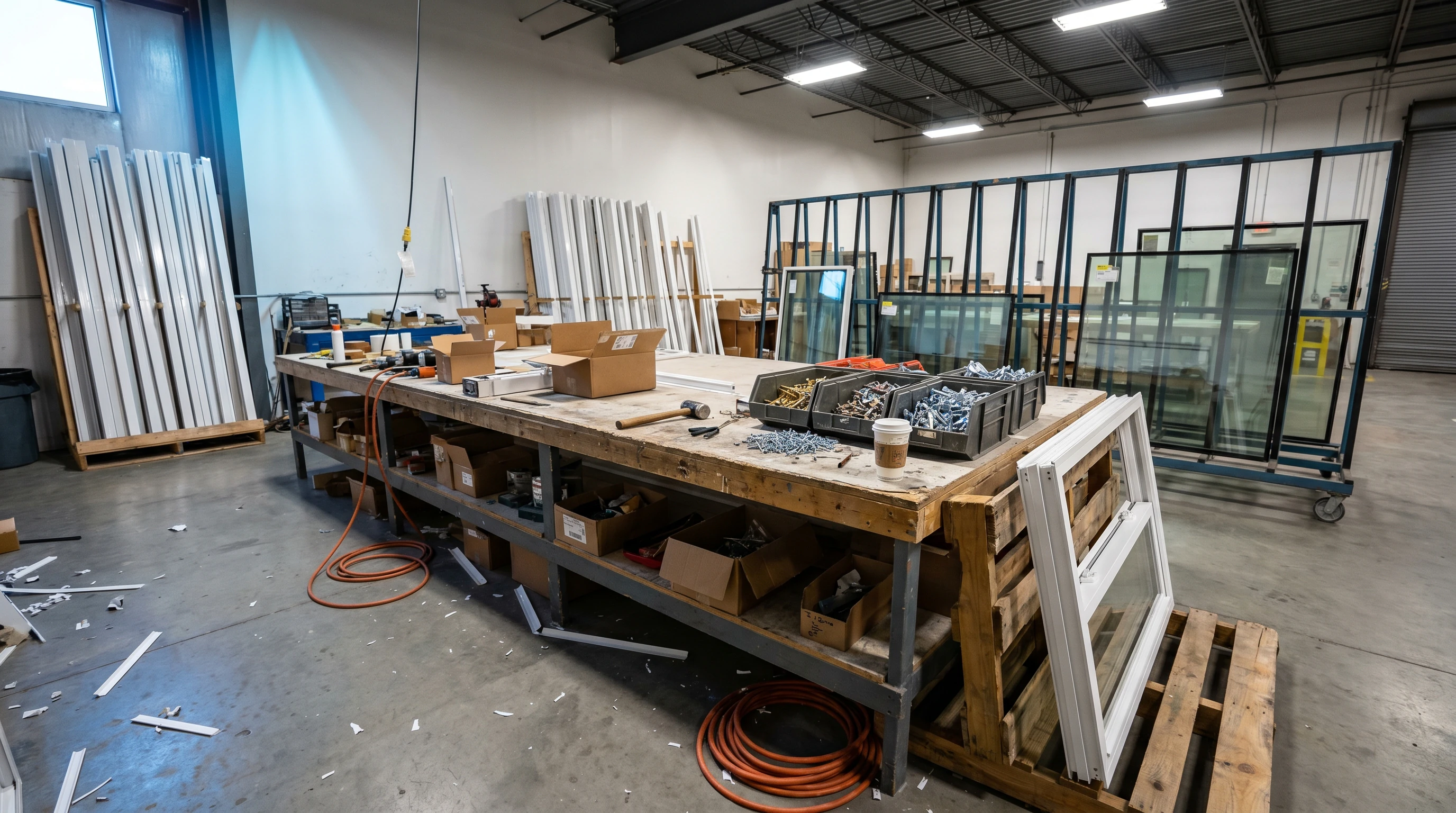
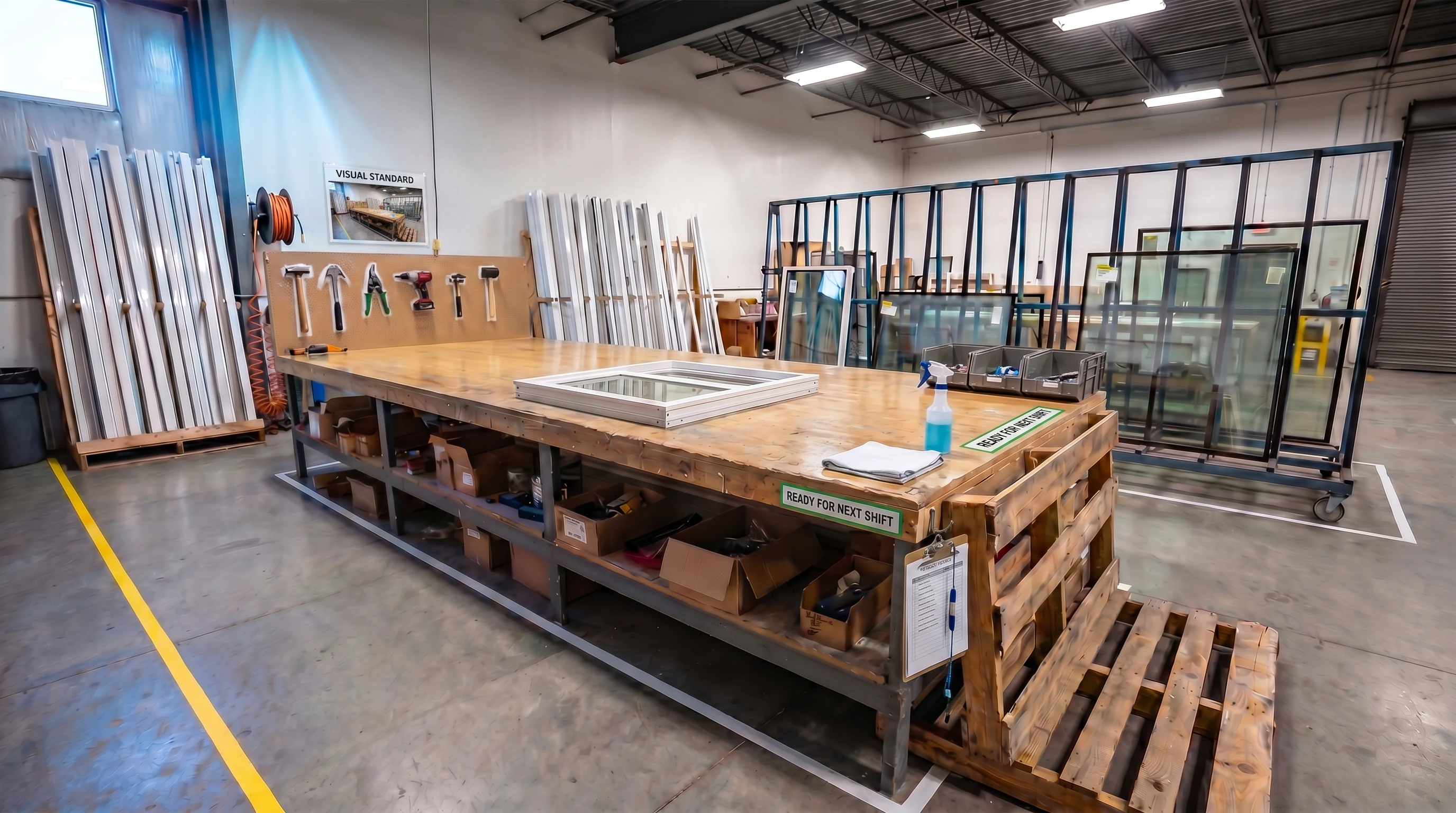
Every plant has a bench like this.
Monday, 6:58 AM — the station as the last shift left it. The glazing hammer is under a rag, the torque driver is missing, and casement locks are mixed through three bins. The first 17 minutes of this shift will be spent hunting, not building. Studies put search time at up to 2 hours per operator, per day.
Five steps, run in order.
Sort → Set in Order → Shine → Standardize → Sustain. Each builds on the one before — there's no point standardizing a layout that hasn't been sorted.
For each step: what it means, what you actually do, and what it changes on this bench.
Keep only what the work needs.
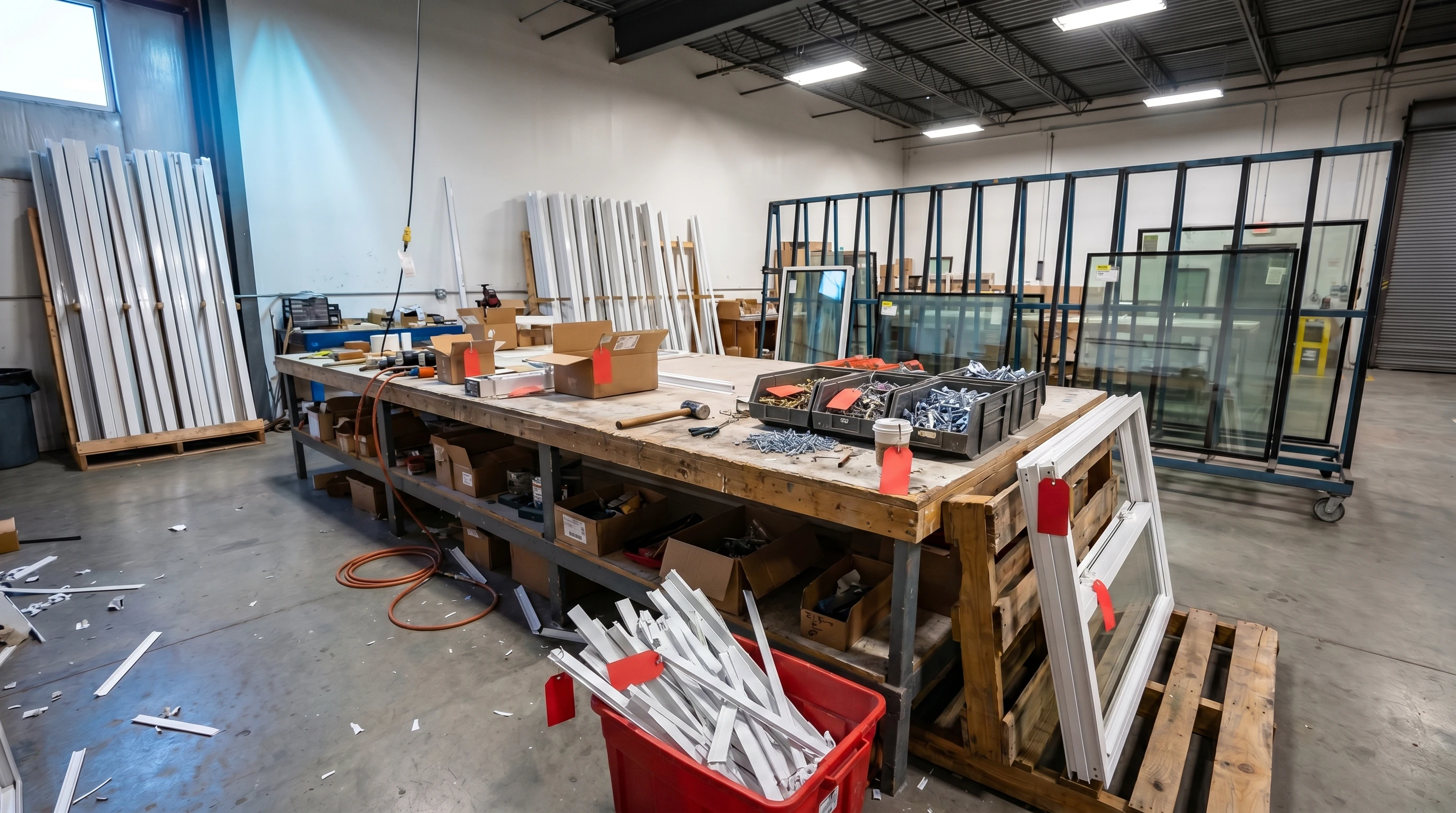
Walk the station item by item and ask one question: “Do I need this to do my job today?” Anything that fails the test gets a red tag and moves to a holding area with a decision deadline — not a hiding place.
What you do
- Touch every item on and around the bench
- Red-tag what the daily work doesn't use
- Set a disposition deadline — return, move, or scrap
Red tag
- Item — casement lock bin (mixed)
- Category — material
- Reason — wrong station
- Disposition — return to kitting
A place for everything — by frequency of use.
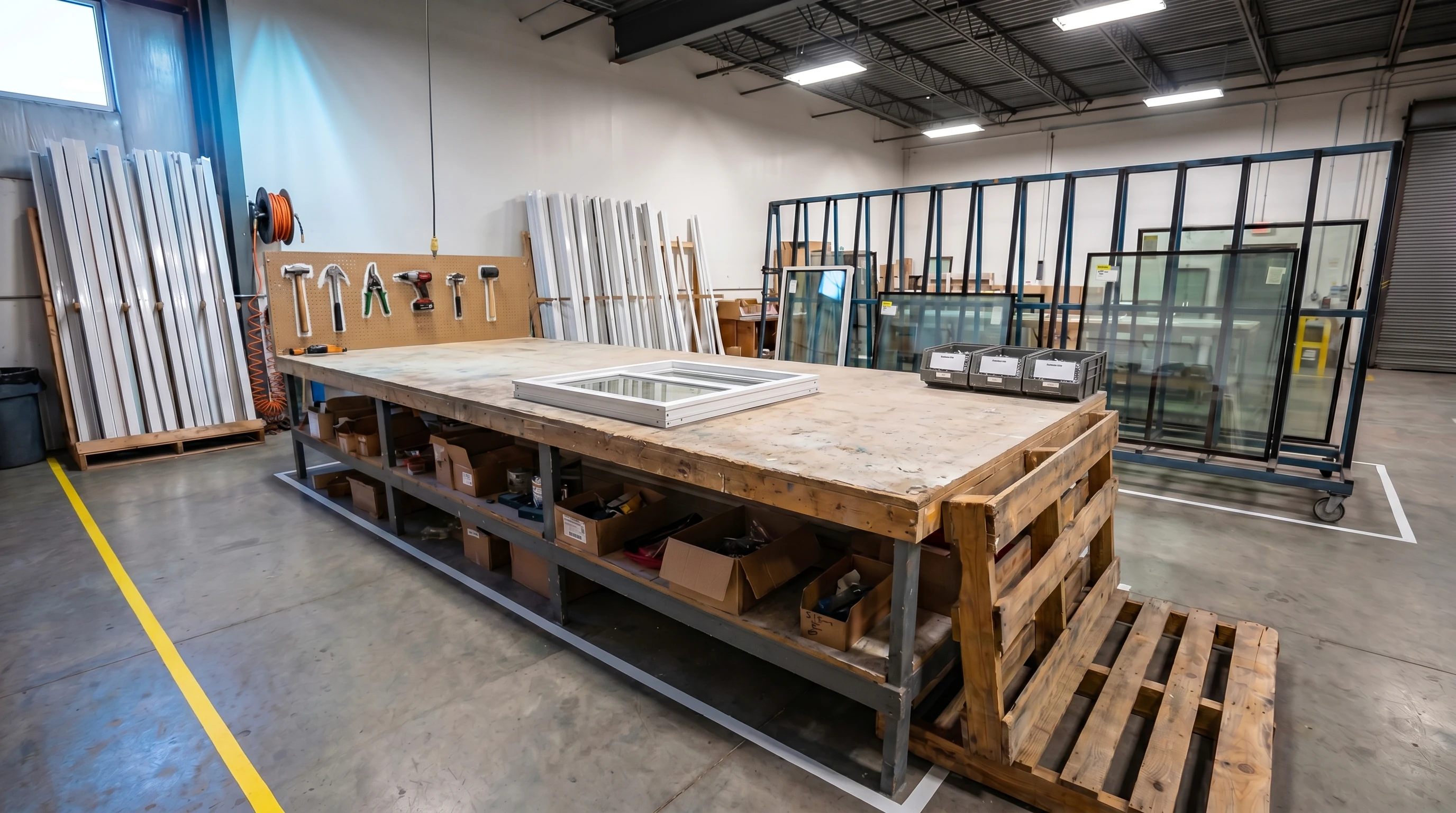
Position items by how often the work reaches for them, then make every position visible: a shadow board for tools, one part type per labeled bin, tape on the floor.
What you do
- Daily tools → shadow board, within arm's reach
- Weekly items → within two steps
- Rare items → central storage, off the station
- Tape the floor: yellow aisles, white boundaries
200 reaches/shift × 3 sec saved ≈ 10 minutes back. Every day.
Clean to inspect, not to impress.
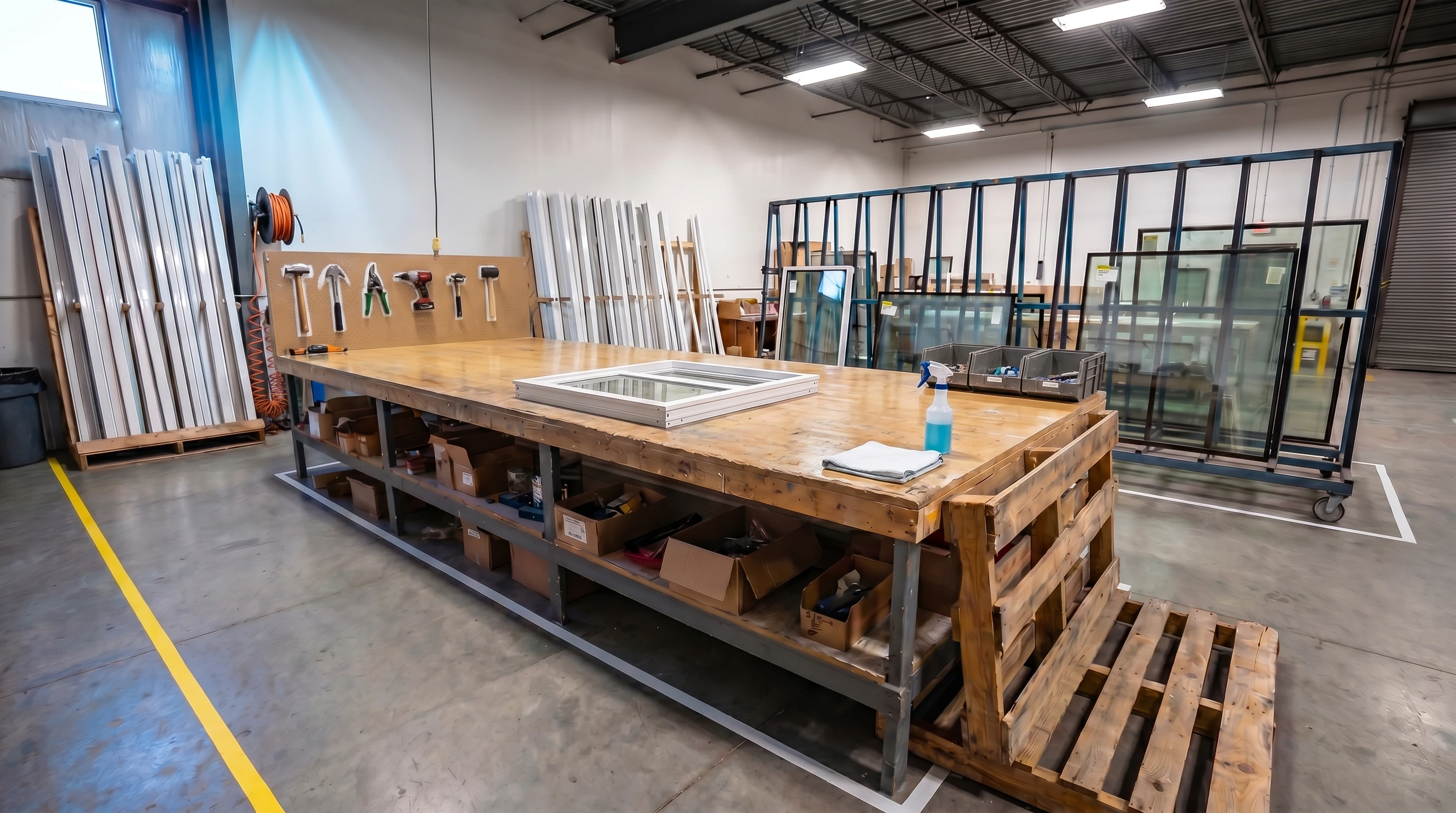
Shine is five minutes of cleaning used as an excuse to look closely. On this bench, a routine wipe-down caught sealant residue building up on the frame seating area — contamination that causes seal failures weeks after the unit ships.
What you do
- Five minutes daily, surfaces and tools
- While you clean, look: leaks, frays, residue, wear
- Treat every anomaly you find as a find, not a chore
Make the good state the normal state.
Steps 1–3 produced a ready station once. Standardize makes it repeatable: a photo of the ideal state posted at the station, and a five-minute end-of-shift checklist so every handover starts clean — ending the 15–20 minutes each shift used to lose to the last one's leftovers.
What you do
- Photograph the station at its best; post it
- Write a 5-minute end-of-shift checklist
- Make “ready for next shift” the definition of done
Audit it yourselves.
Sustain is the station still looking like this in week four — without a manager checking. Teams score each other on a 25-point card. Peer audits beat policing: the team owns the standard, so the standard survives.
What you do
- Weekly peer audit, 0–5 per S
- Post the score where the team sees it
- Milestone: four straight self-run weeks
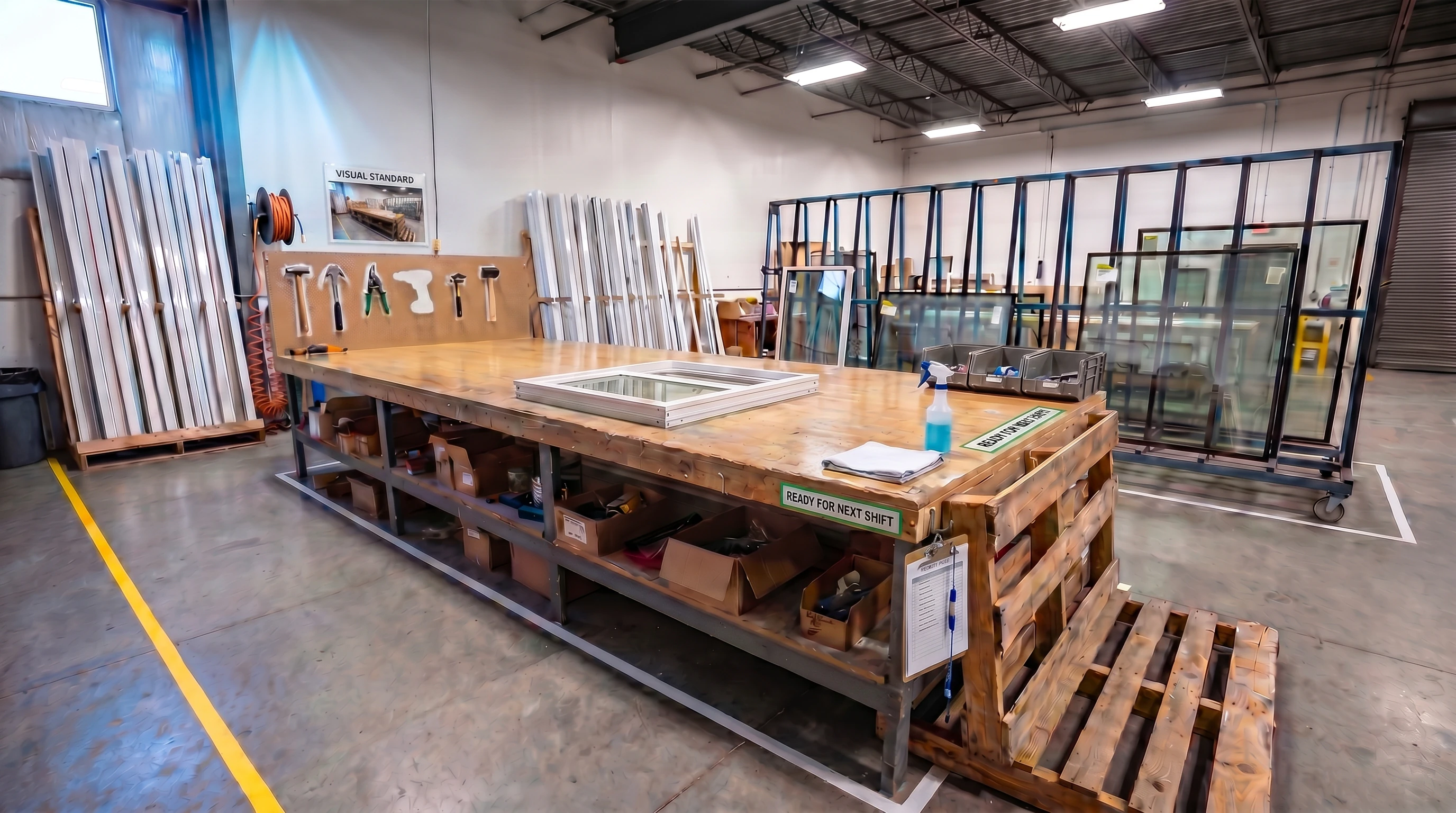
A torque driver walked off this bench last night. Can you tell?
Look at the Monday bench. Take your time. You can't answer — nobody can. The first sign will be an operator hunting mid-build, twenty minutes into the shift, with a unit half-glazed on the bench.
The 5S bench answers before you finish asking.
One empty outline on the shadow board. You saw it from across the aisle, before your shift even started — time to find it or replace it before it stops a build.
This is what 5S is actually for. When every item has one visible home, normal has a shape — and anything abnormal announces itself: an empty outline, a bin below its min line, a rack outside its taped square. 5S doesn't solve your problems. It exposes them while they're still small enough to solve.
Not the janitor. Not a committee.
5S fails the moment it becomes someone else's job. The people who do the work own the workspace — everyone else's role is to make that ownership possible.
Drag the line: same bench, same camera, five steps apart
BeforeAfterFrequently asked
- Isn’t 5S just cleaning?
- No — cleanliness is a side effect. 5S is a system for workplace readiness and visual control: every item has a home, so missing, misplaced, or abnormal things become visible at a glance. The cleaning step (Shine) exists to force close inspection, not to impress visitors.
- What does 5S stand for?
- Sort (Seiri), Set in Order (Seiton), Shine (Seiso), Standardize (Seiketsu), and Sustain (Shitsuke). They run in order — each step depends on the one before it, so there is no point standardizing a layout that has not been sorted.
- Where do I start?
- One station, not the whole plant. Run Sort with the operator who works it, finish all five steps there, and let the result recruit the next station. A visible success beats a site-wide rollout that stalls at step two.
- Why do most 5S programs fail?
- Two reasons: it's assigned to someone other than the operators, or audits turn into policing. Sustain works when teams score themselves and leadership funds the time — four consecutive weeks of self-run peer audits is the milestone that predicts it will stick.
- How does 5S help with problem solving?
- When every item has one visible home, "normal" has a shape — so anything abnormal announces itself: an empty tool outline, a bin below its minimum line, a cart parked outside its taped square. 5S does not solve problems; it exposes them while they are still small enough to solve.
Teach it before you roll it out
Reading about Set in Order convinces nobody. Run the 5S numbers game with your team instead: three timed rounds on the same sheet, where the only variable is how the numbers are organized. The whole score is time spent searching, and people believe their own stopwatch. Play it in the browser, or print the one-page facilitator card.