
Kanban for high-mix, low-volume manufacturing
Kanban mechanics for operations where every build differs, replenishing the everyday parts rather than finished products across custom manufacturing floors.
Kanban functions as a physical pull signal where consumption triggers replenishment. Standard textbooks base examples on high-volume assembly lines with steady demand. Custom manufacturing brings different challenges because each order varies, usage per component stays small, and expensive specialty items carry long lead times. The solution begins with part segmentation: establish visual loops for standard parts shared across orders, and plan unique items separately.
 Case · 10 lessons · 23 minutesJump to the full training course built for one builder
Why high-mix work complicates kanban loops
Most kanban manuals reflect automotive assembly plants with repeating schedules. Four operational realities change when every order across your shop floor requires custom work.
Daily consumption for each part stays low and irregular. An item needed on half your builds averages 0.5 each working day. The standard formula holds up, but the resulting numbers remain small.
Large machinery and equipment remain stationary during assembly while operators bring parts to the unit. When a single washer is missing, an operator walks away from the station to hunt for it.
The mix of work changes from week to week. Containers calculated for an earlier schedule become outdated, creating sudden stockouts on active hardware alongside overstocked bins for slow jobs.
Certain specialty components, like custom panels or large drives, carry high costs and long supplier lead times. Storing these parts in point-of-use bins locks up operating cash and shop floor space.
Sort parts before designing loops
Decide which parts warrant visual replenishment before placing containers
Separate common parts from custom orders
Failed lean initiatives often stem from attempts to put every inventory item into a bin system. Sort components at each workstation into Runners, Repeaters, and Strangers based on how frequently teams consume them and their unit costs. Runners are common, low-cost parts with short supplier lead times used on nearly every job. Repeaters appear on many builds with moderate expense, which makes them suitable for reorder points. Strangers are costly, unique parts tied to specific customer orders with extended lead times. Strangers stay on material requirements planning tied directly to job schedules, rather than visual floor replenishment.
| Class | Examples | How to replenish |
|---|---|---|
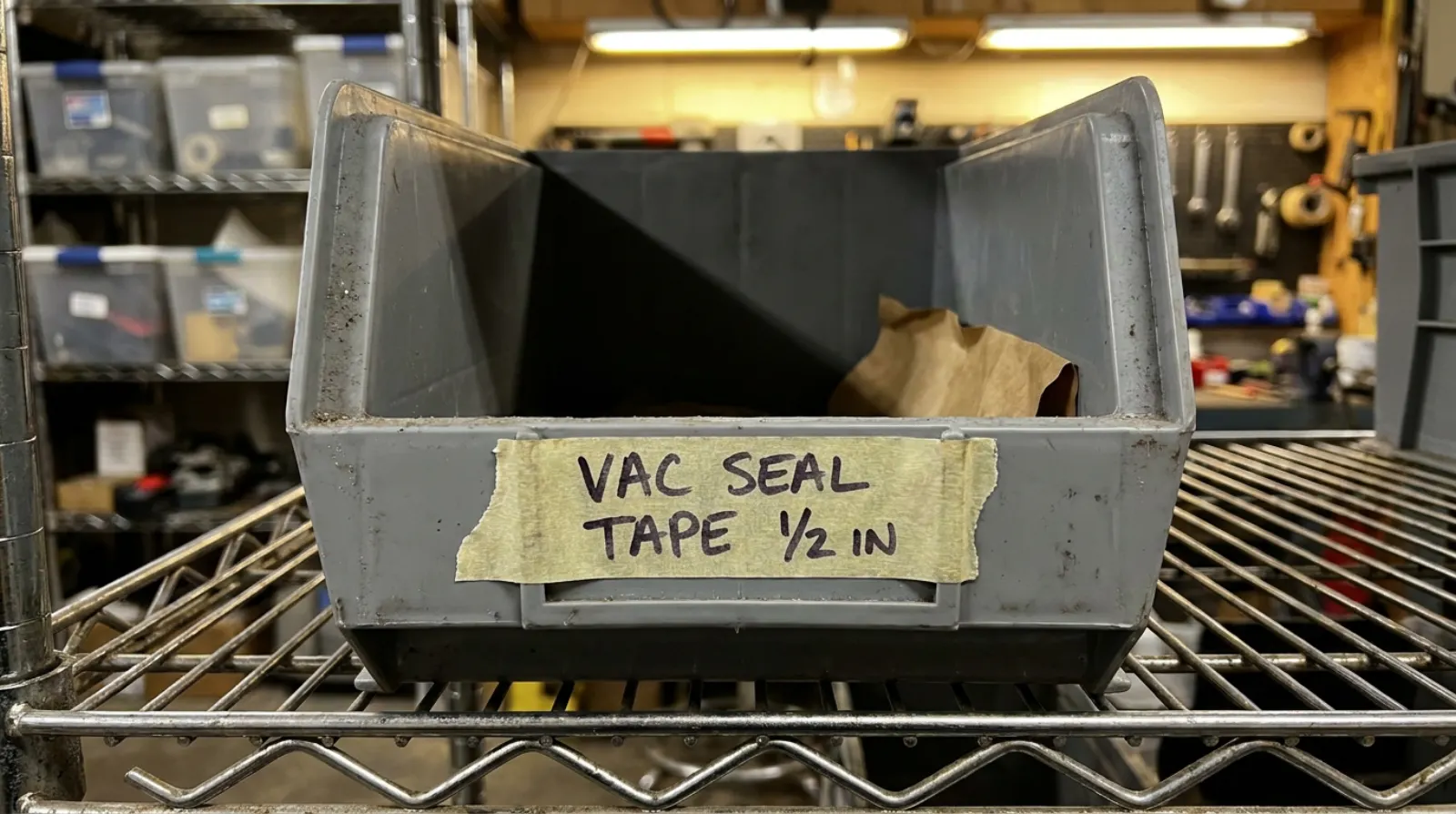
| Runners | fasteners, tape, cable ties, abrasives, gloves, adhesive | Use two-bin racks directly at the workstation for low-cost supplies consumed daily with local suppliers three days away. |
| Repeaters | bearings, filters, hydraulic fittings, pumps | Maintain a reorder point that initiates supplier replenishment when on-hand inventory drops to a defined threshold. |
| Strangers | motors, castings, customer-specified panels, custom trim | Order directly through material requirements planning so components arrive when the specific production job begins. |
Station counts show about 70 out of 100 components are Runners, 20 are Repeaters, and 10 are Strangers. Those 10 Strangers represent roughly 80 percent of inventory spending. Put visual bins on the common parts and schedule the rest.
The physical card loop
A physical card, drop box, dedicated handler route, and returned container
How the visual cycle operates
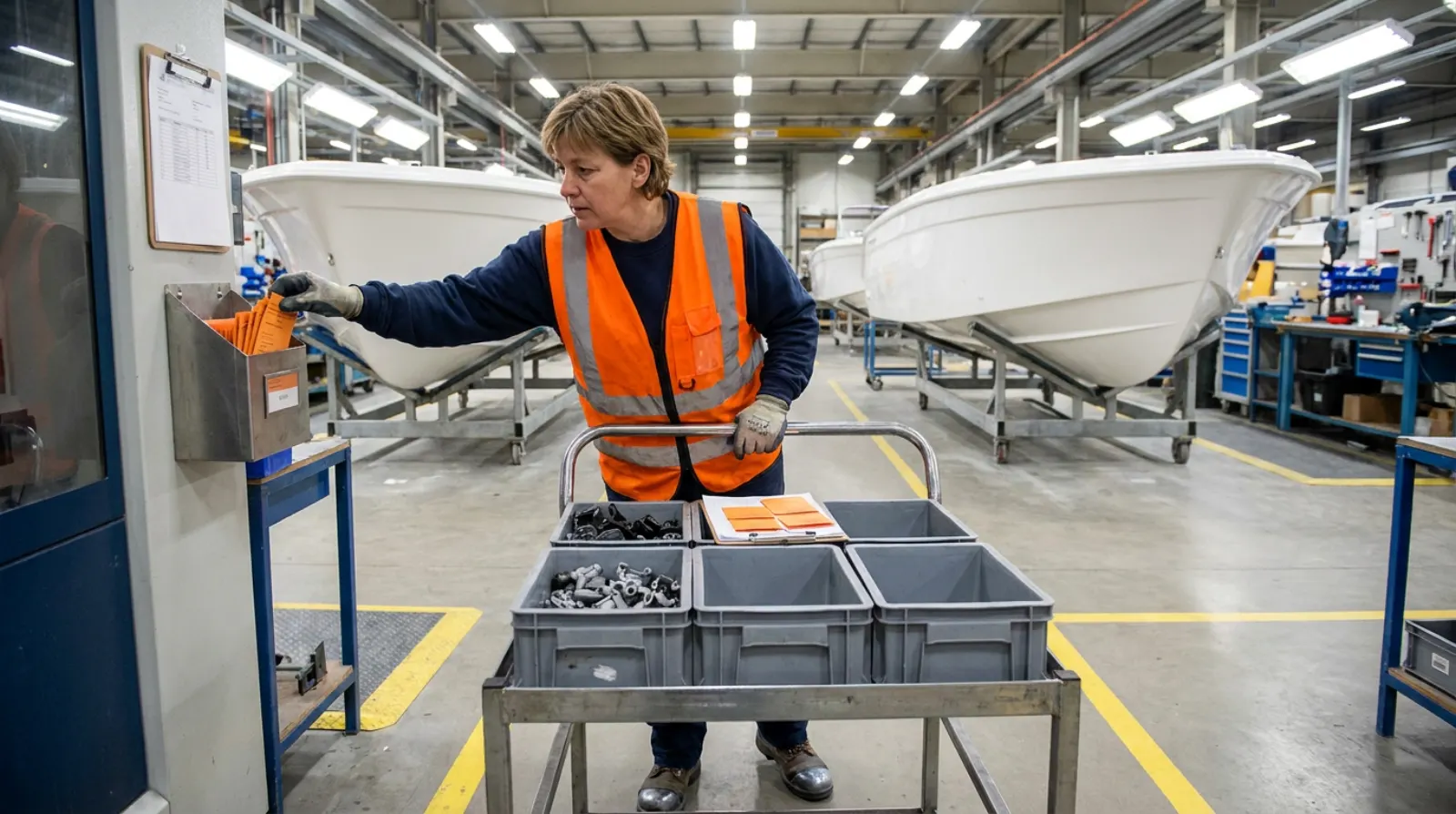
Every physical card pairs with a specific container. The card stays attached to its container until empty, and containers never sit without cards. This direct pairing keeps the replenishment cycle accurate without digital tracking. A material handler walks a standardized route through the shop floor every 90 minutes. Technicians drop empty signals without placing calls, sending emails, or leaving work areas.
- 1Empty containerAn operator uses the final piece, pulls the attached card, drops it into the collection box, and pulls forward the second full bin.
- 2Route sweepThe material handler collects dropped cards along the scheduled walking path and checks workstations for raised replenishment flags.
- 3Stockroom retrievalThe handler pulls the specified hardware and quantity listed on the card, attaching the card to the freshly filled container.
- 4Return deliveryThe handler returns the replenished bin to the workstation rack on the subsequent loop, restoring the primary reserve.
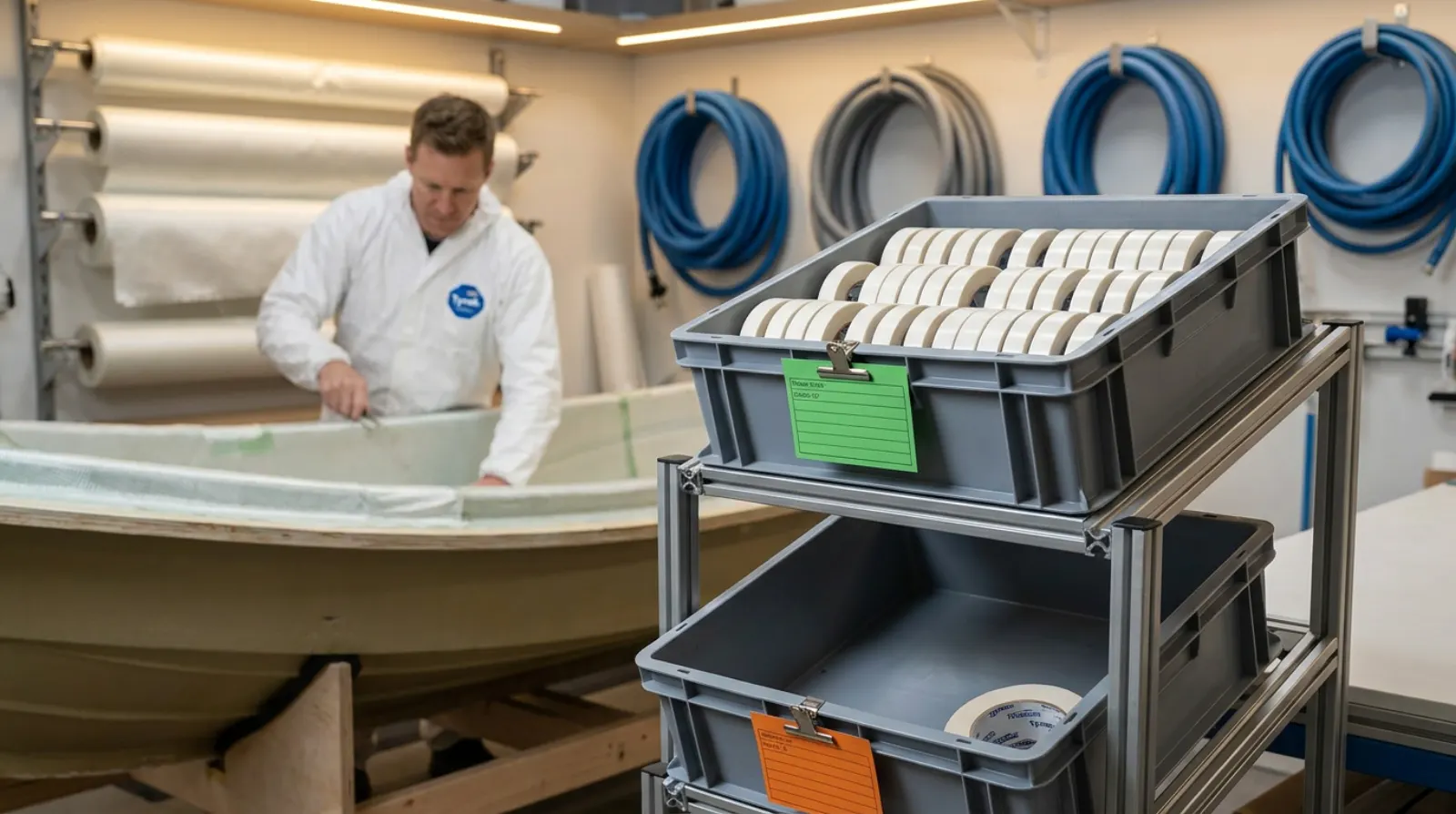
Gravity-flow racks
Racks hold two containers per channel for Runners. When the front bin empties, the operator removes it, the reserve slides forward, and assembly work continues uninterrupted.
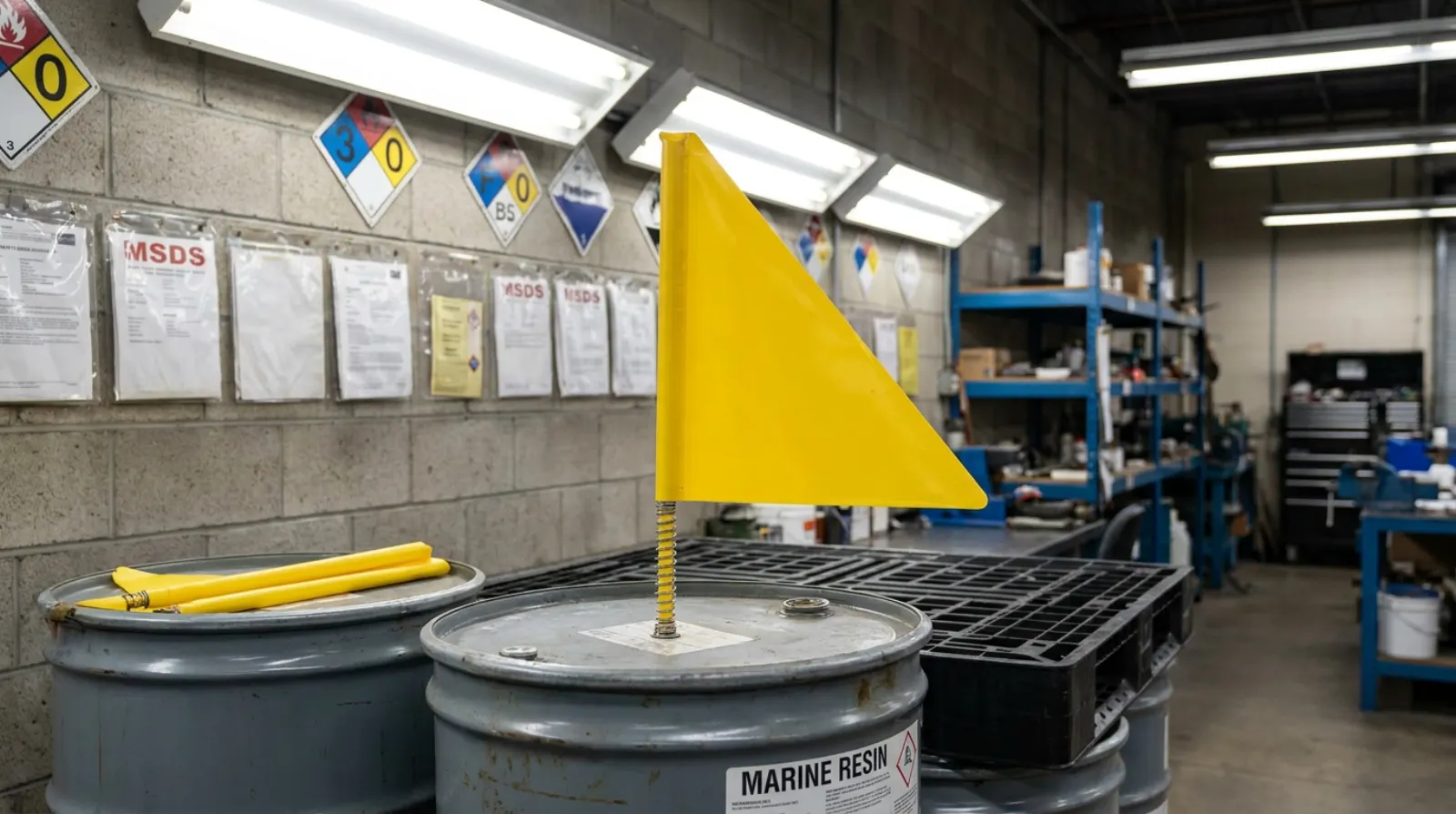
Visual signal flags
Large supplies like 55-gallon drums of cutting fluid require visual markers. Operators raise a bright yellow flag when level markers drop, signaling the handler to deliver replacements within 24 hours.
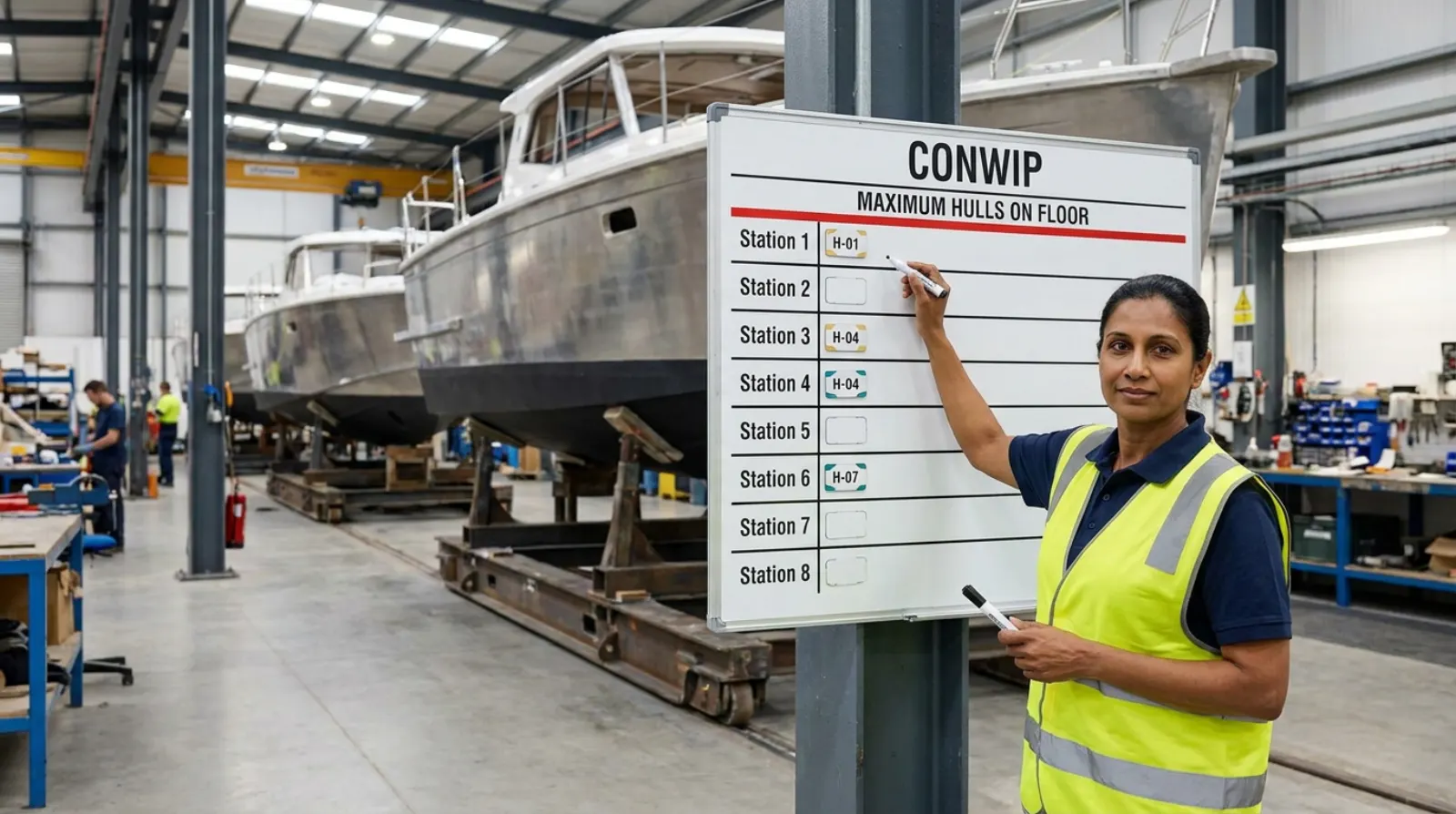
Work in process caps
Control shop capacity by limiting active assemblies across the floor to six units. A new job enters production only after a completed build departs the floor.

Calculate bin quantities
Determine container sizes using consumption rates and verified vendor schedules
Determine required container quantities
A single formula establishes required containers for a part at an active station. Low-volume manufacturing produces modest results, often below one whole bin. This represents standard behavior for customized operations, so fractional results should never cause alarm. Base consumption figures on actual production records from the floor rather than broad monthly forecasts, ensuring your math matches the real work moving through the building.
Runner calculation for common hardware
A mechanical assembly station consumes 20 fasteners per working day, so daily demand D is 20. The local distributor delivers replenishment stock in 3 working days, making lead time L equal to 3. Reliable deliveries mean the safety factor S is 25 percent. The storage bin holds 100 fasteners, making capacity C equal to 100. That produces 0.75, which rounds up to the required minimum of 2 bins so a reserve sits ready during replenishment.
Repeater calculation for shared assemblies
A pump installs on half the orders, giving an average daily demand D of 0.5 per working day. The distributor takes 10 working days, so lead time L is 10. Long lead times increase risk, setting safety factor S to 30 percent. A container holds 4 pumps, so capacity C is 4. Dividing 6.5 by 4 yields 1.625. This rounds up to 2 containers, providing 8 pumps across the loop.
Round calculations up to the next whole container, as stockouts cost more than modest safety stock. Review numbers each quarter against 90 days of actual production, or immediately when assembly schedules shift toward larger builds.
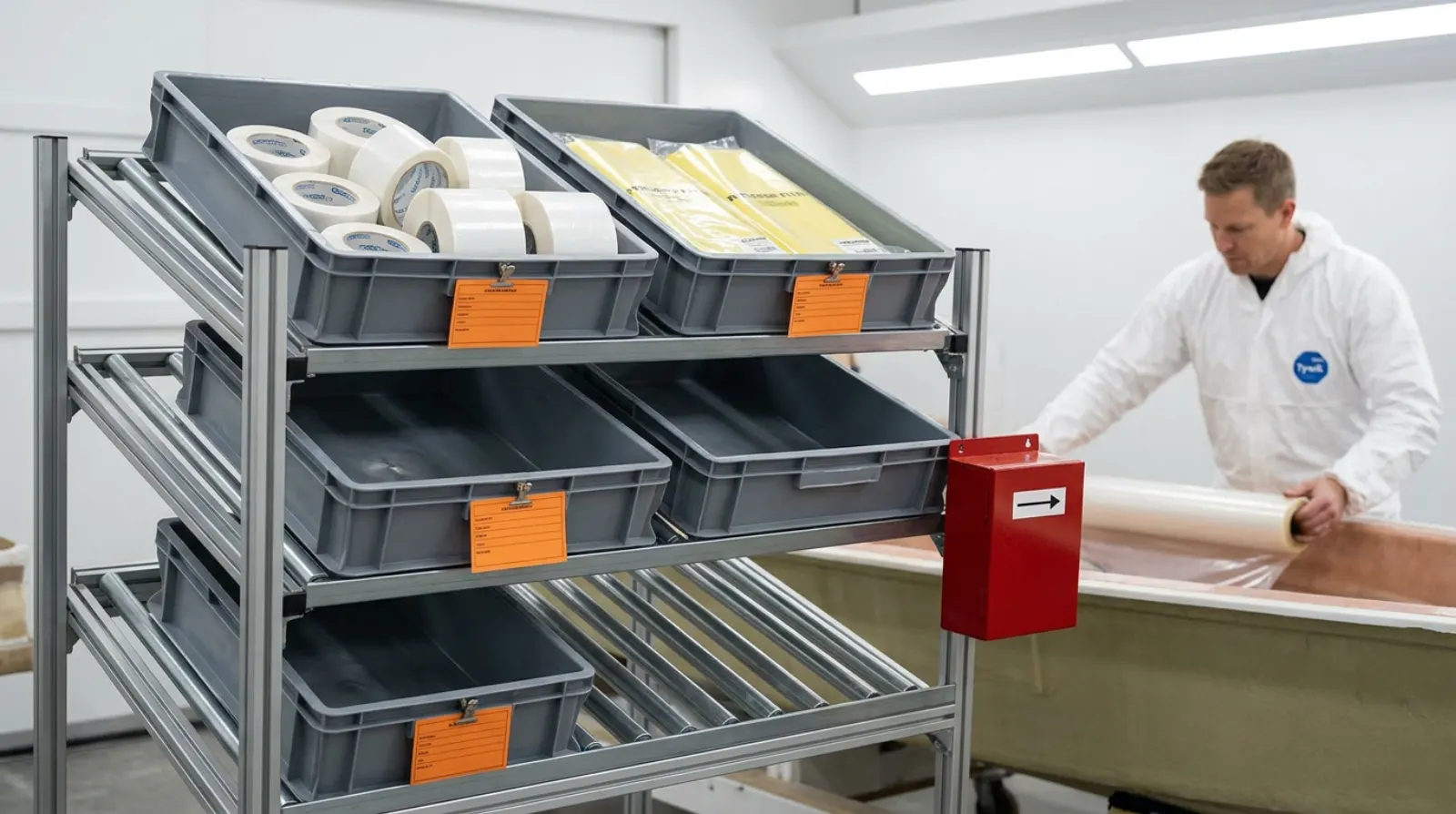
Workstation visual design
Stage components directly at the point of installation based on part classification
Position components at the station
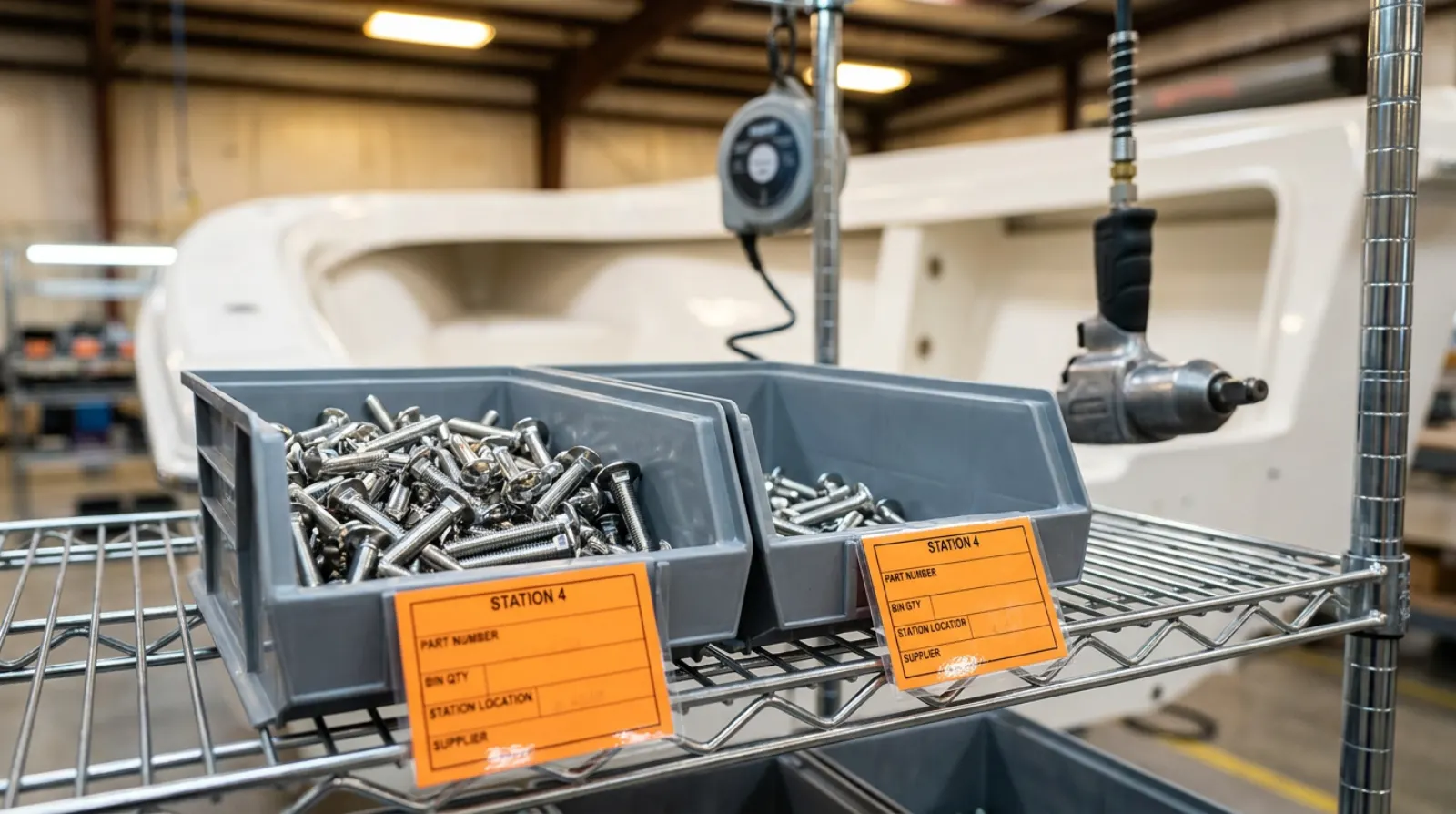
Stage every Runner directly where hands assemble parts, within reach of technicians. When components sit far from the work area, technicians lose valuable production time walking across the building. Organizing hardware near active hands eliminates needless searching. Three distinct staging setups accommodate common high-mix components, matching the specific storage method to the physical shape and replenishment speed of each inventory class.
Gravity racks
Place gravity racks for Runners two steps from the assembly fixture. Stack lanes two bins deep so the reserve slides down when an operator drops the empty container into the return lane.
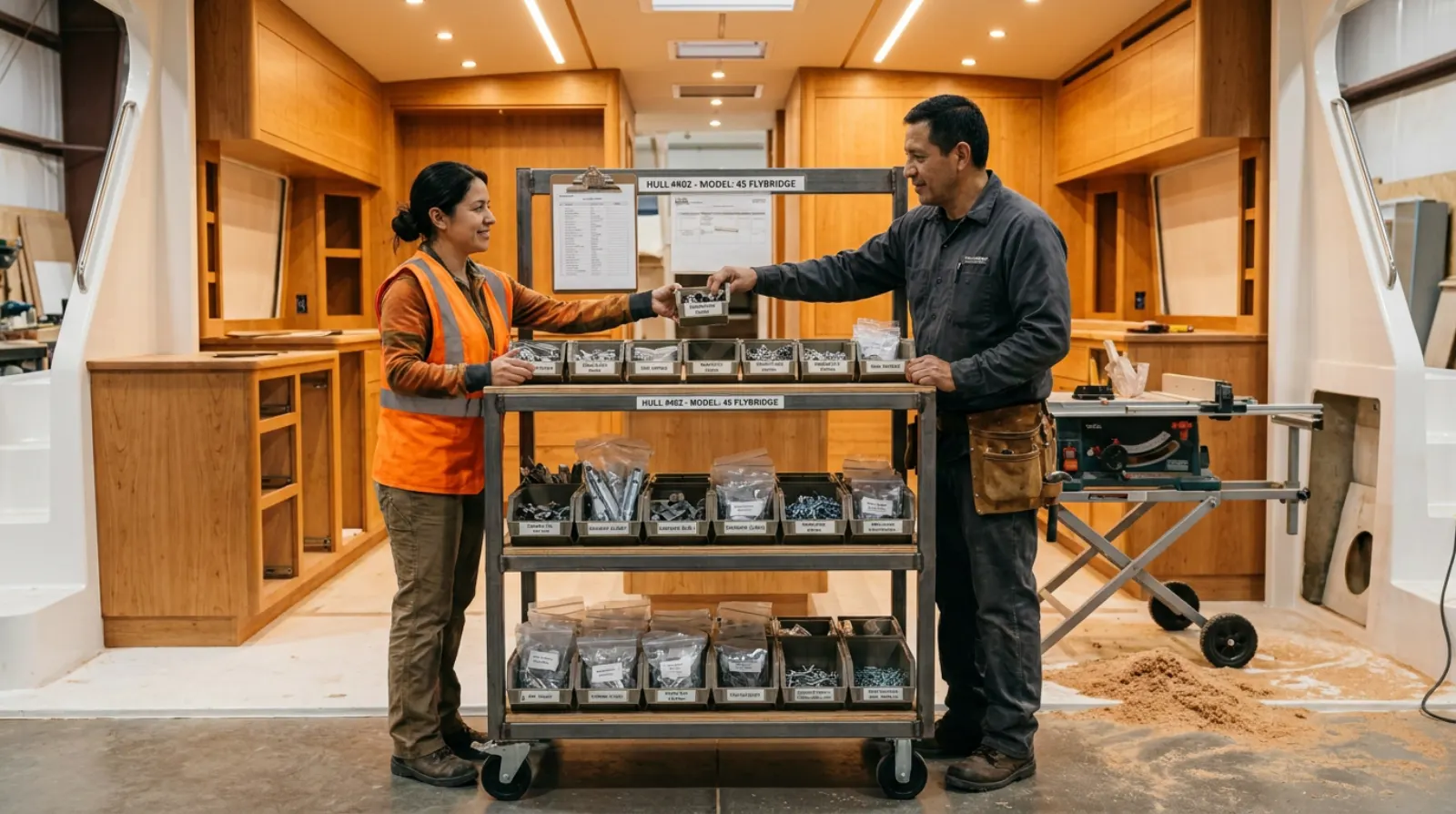
Kitting carts
Deliver order-specific hardware on rolling kitting carts organized from production bills of materials. The cart arrives at the workstation the day mechanical assembly begins, staging required parts for that build without pulling inventory from station bins.
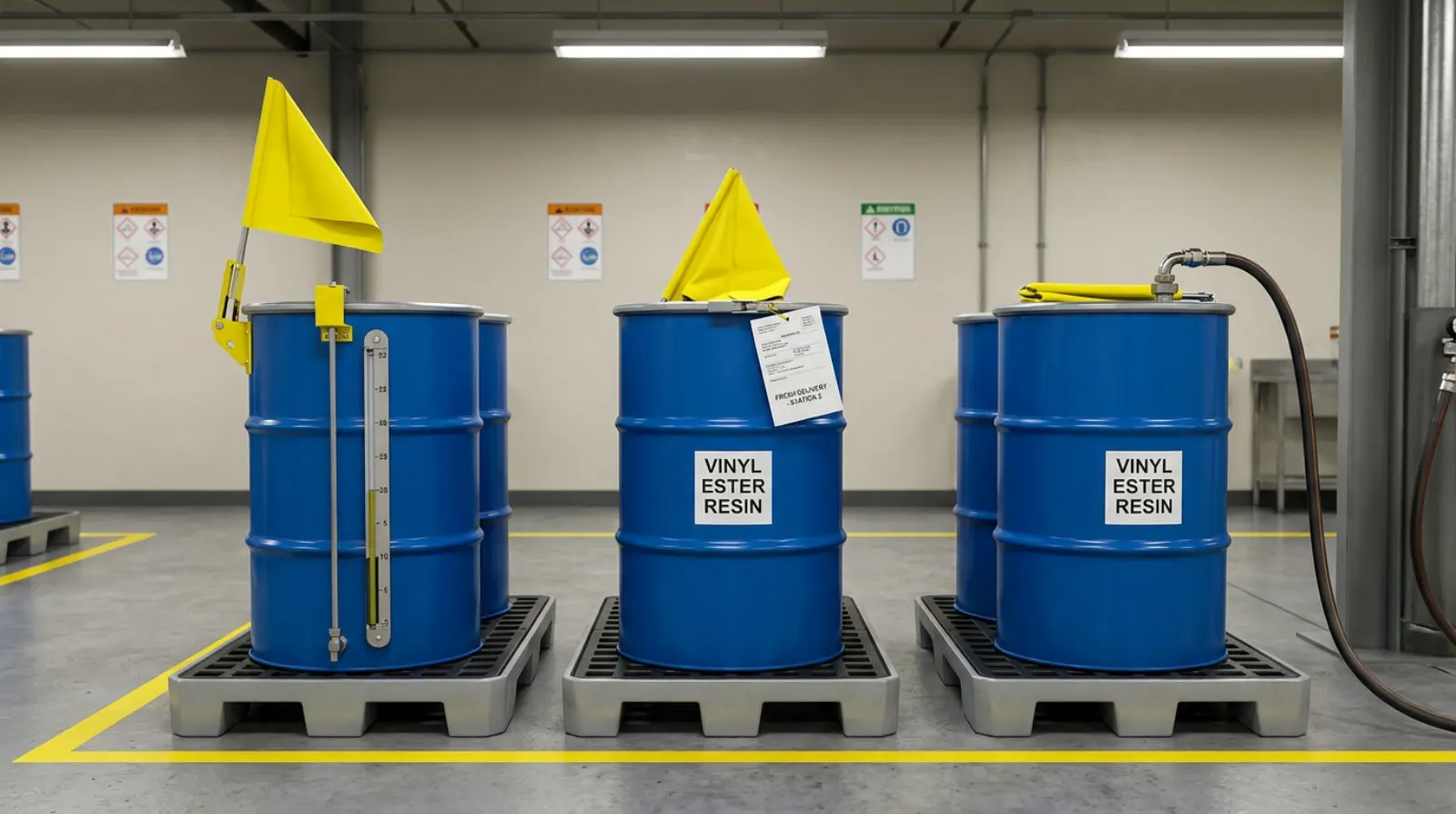
Flagged liquid stations
Maintain 3 containers for bulk liquids like drums and totes. One container actively feeds the station, one full reserve stands ready on deck, and one empty unit carries a raised signal flag for replenishment.
The material handler route links every station together across the plant. Walking the identical loop on a set schedule during both busy and slow production periods establishes confidence for operators. Without that steady cadence, technicians stop trusting the system and visual cards become discarded scraps.
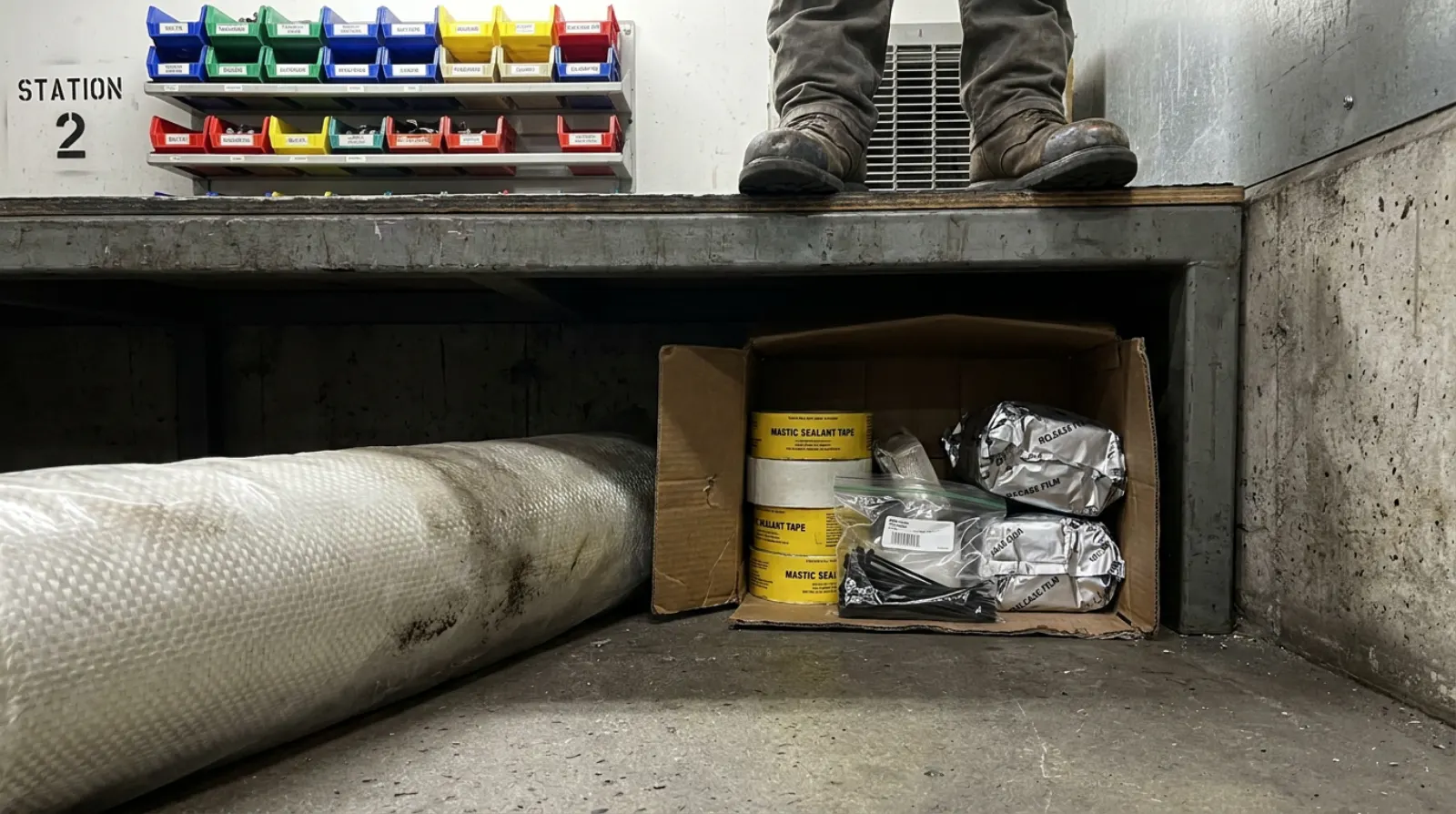
Common breakdown points
Floor replenishment systems risk abandonment within six months without disciplined maintenance
Five points of system failure
Every common breakdown stems from recognizable habits on the floor. Applying clear operational rules protects visual replenishment over extended production runs.
Placing kanban cards on expensive custom components ties up capital in stagnant inventory. Keep Strangers on schedule-driven purchasing, restricting physical cards to shared Runners and Repeaters.
Technicians who fear runouts stash backup hardware in toolboxes. This hides true demand from the handler and skews reorder data. Maintain routine 5S sweeps to build stock reliability.
Setting up cards without clear rules leads to discarded signals. Enforce the standard that cards remain attached to bins or rest inside the return box, accompanied by regular handler sweeps.
Container sizes based on past production cause shortages when product mix shifts to larger units. Recalculate container quantities every quarter using the previous 90 days of actual consumption data.
Supervisors take parts from neighboring workstations to push an urgent build, which triggers incorrect reorders across the line. Address unexpected component shortages through root-cause analysis instead of informal line raiding.
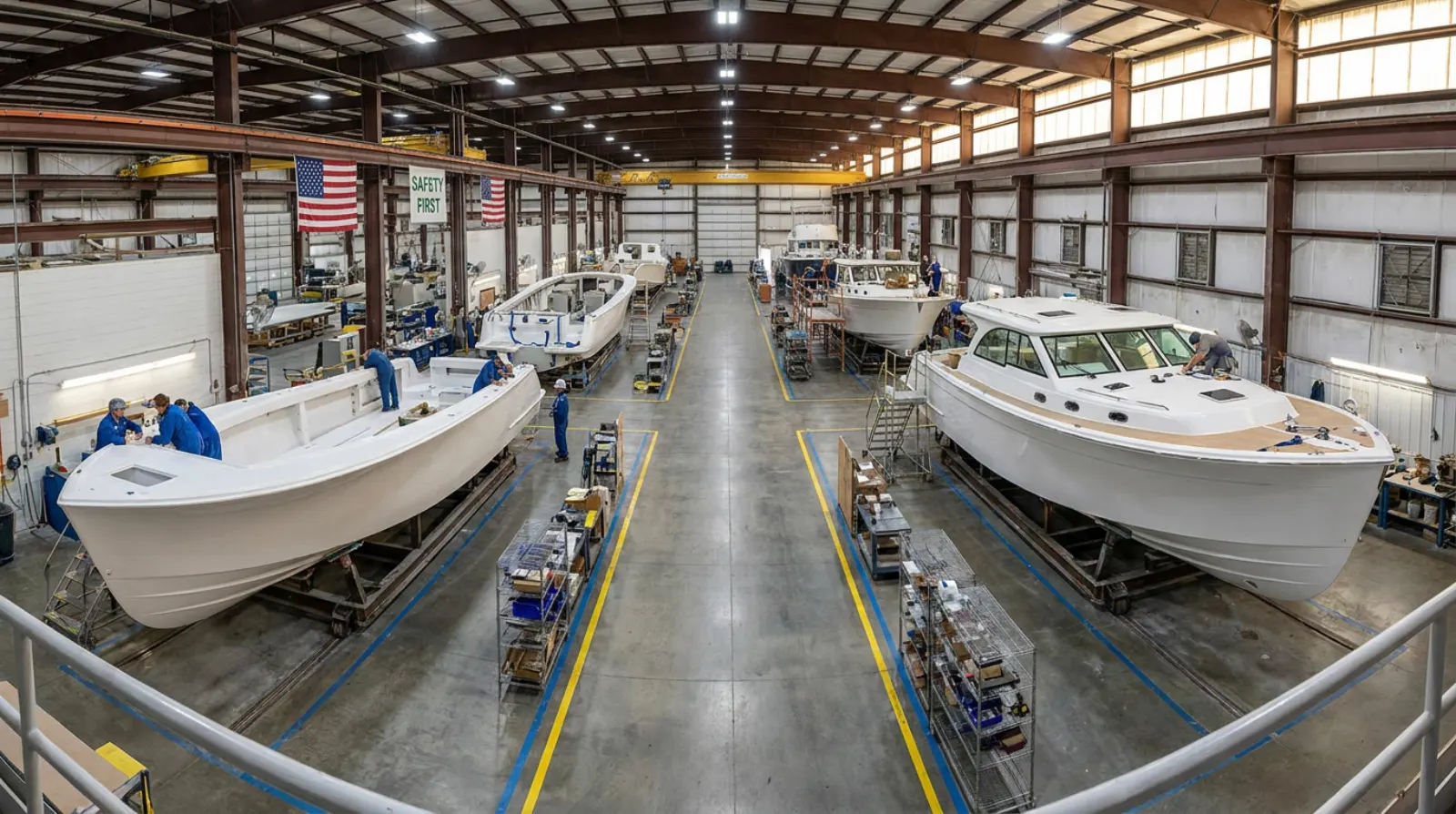
Visual replenishment at a production boat builder
Here is one real application of the principles above at a production boat builder. The yard finishes roughly one craft every 6 working days, with specifications changing hull to hull. Kaizumi created a full training course for the production team from the yard's own parts, stations, and process.
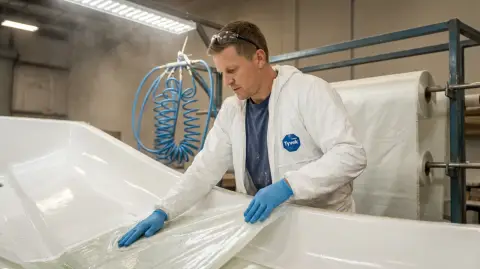
Ben, a laminator with 15 years of experience at the yard, was sealing vacuum bags on a 39-foot hull when his station ran out of sealant tape. He walked to the central stockroom, waited 11 minutes at the counter, and walked back, losing 37 minutes. The curing resin approached its application window, putting the hull at risk because nobody had reordered tape.
The yard introduced two-bin gravity racks for tape, peel ply, and breather fabric at lamination stations. Elena now checks yellow flags on bulk resin drums along her 90-minute sweep. Joinery hardware moves on dedicated kitting carts built from individual boat orders, while engines remain on scheduled purchasing. Priya and Tomás evaluate bin quantities each quarter.
Six weeks into the rollout, Ben had worked 3 full weeks without walking to the warehouse. During the scheduled review, expanding production of larger craft increased bolt usage from 20 to 35 each working day, prompting the team to resize the station containers.
The complete course includes 10 lessons detailing this boatyard rollout. Follow the sequence from beginning to end or select specific modules covering station hardware and calculations.
Part 1
Part 2
Part 3
Part 4
Built by Kaizumi for the yard. Similar tailored training is available for your facility.
Request a curriculum overviewThree steps for this week
- 1Log shortagesWalk the assembly area and record every component technicians searched for over the past 30 days, noting warehouse trips and assembly delays.
- 2Segment partsClassify recorded parts into Runners, Repeaters, and Strangers. Separate common consumables from order-specific hardware before designing storage.
- 3Pilot one loopSelect one Runner, calculate required bin quantities, write out the physical card, and introduce the two-bin setup at tomorrow's team huddle.
Develop custom training for your team
The boat builder course came from one yard's parts, stations, and people. Kaizumi creates identical courses structured directly around your own process, your parts, and your operational language.
Request a curriculum overviewFrequently asked questions
- Can pull signals function effectively when product configurations vary continuously?
- Yes, when applied to shared hardware and consumables used across multiple product configurations. It is not intended for expensive, order-specific components with irregular consumption patterns. Segment parts into Runners, Repeaters, and Strangers first, then install visual bins strictly for the common Runners and selected Repeaters.
- How do manufacturers classify parts into runners, repeaters, and strangers?
- Runners are high-volume, low-cost parts used across most products, managed with visual two-bin loops at the station. Repeaters are intermediate items with irregular demand, replenished through preset reorder points. Strangers are high-cost, custom parts purchased strictly against customer bills of materials using standard material requirements planning.
- How do you calculate kanban bin quantities for fractional demand?
- Use the standard formula combining daily consumption, replenishment lead time, and safety allowance, divided by container capacity. If demand is 0.5 parts per working day, lead time is 10 days, safety is 30 percent, and bins hold 4 parts, the calculation yields 1.625. Rounding up establishes 2 bins holding 8 parts.
- How many containers are needed at minimum for each station part?
- The minimum is 2 bins per part number at each station. One container remains open for active production while the second full container serves as reserve inventory while the empty bin moves through picking and replenishment. Always round fractional calculation results up to ensure continuous coverage.
- How often should production teams recalculate bin quantities?
- Recalculate bin quantities every quarter using the previous 90 days of actual consumption data from the shop floor. Recalculate earlier if the production schedule shifts toward larger products or variants that alter daily consumption rates of common components across workstations.
Related concepts
Related guides
Tools
Sources
- Lean Enterprise Institute, Lean Lexicon: kanban
- Ian Glenday, Breaking Through to Flow: runners, repeaters, and strangers
- Yasuhiro Monden, Toyota Production System: determining the number of kanban
- Wallace Hopp and Mark Spearman, Factory Physics: CONWIP
Founder of Kaizumi, an AI-powered Lean training platform. More about Matthew →
Updated September 2026 · Case studies come from a full Kaizumi training course, presented without the client company name. Worked numerical examples provide consistent illustrative reference. All techniques adhere to standard manufacturing pull practices.